
What Is Bruxism?
Bruxism is a repeated habit of clenching or grinding the teeth, often during sleep but sometimes while awake. The activity loads the jaw muscles and temporomandibular joints, which connect the lower jaw to the skull. Bruxism may occur without awareness and can contribute to jaw tension, tooth wear, facial soreness, or morning headaches.
Quick Facts About Bruxism
Category
Jaw muscle and tooth-clenching habit
Used for
Describing grinding, clenching, and related jaw strain
Common confusion
Confused with ordinary jaw movement or TMJ disorder
Also called
Teeth grinding, Jaw clenching
Often discussed with
TMJ Disorder Treatment
Key Takeaways About Bruxism
- Bruxism often happens without conscious awareness.
- Jaw tension may appear after sleep or stressful activities.
- Bruxism is not the same as a temporary jaw stretch.
How Bruxism Works
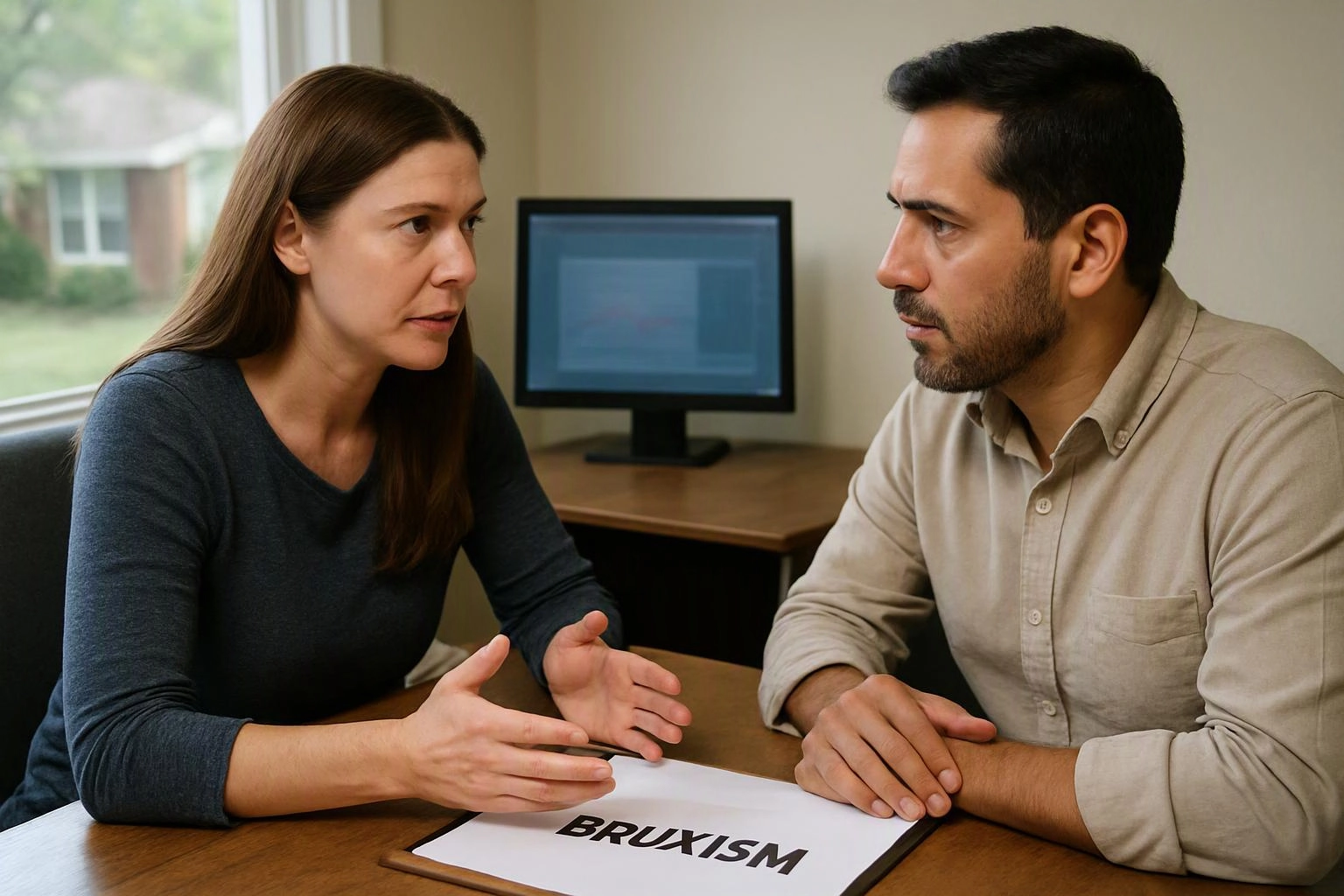
Bruxism develops when the jaw muscles repeatedly contract to press the teeth together or move them against each other. Sleep-related activity may occur without awareness, while awake bruxism can appear during concentration, stress, or sustained posture. The force can affect the teeth, jaw muscles, and temporomandibular joints.
Related glossary terms: Trigger Point, Muscle Spasm, Forward Head Posture.
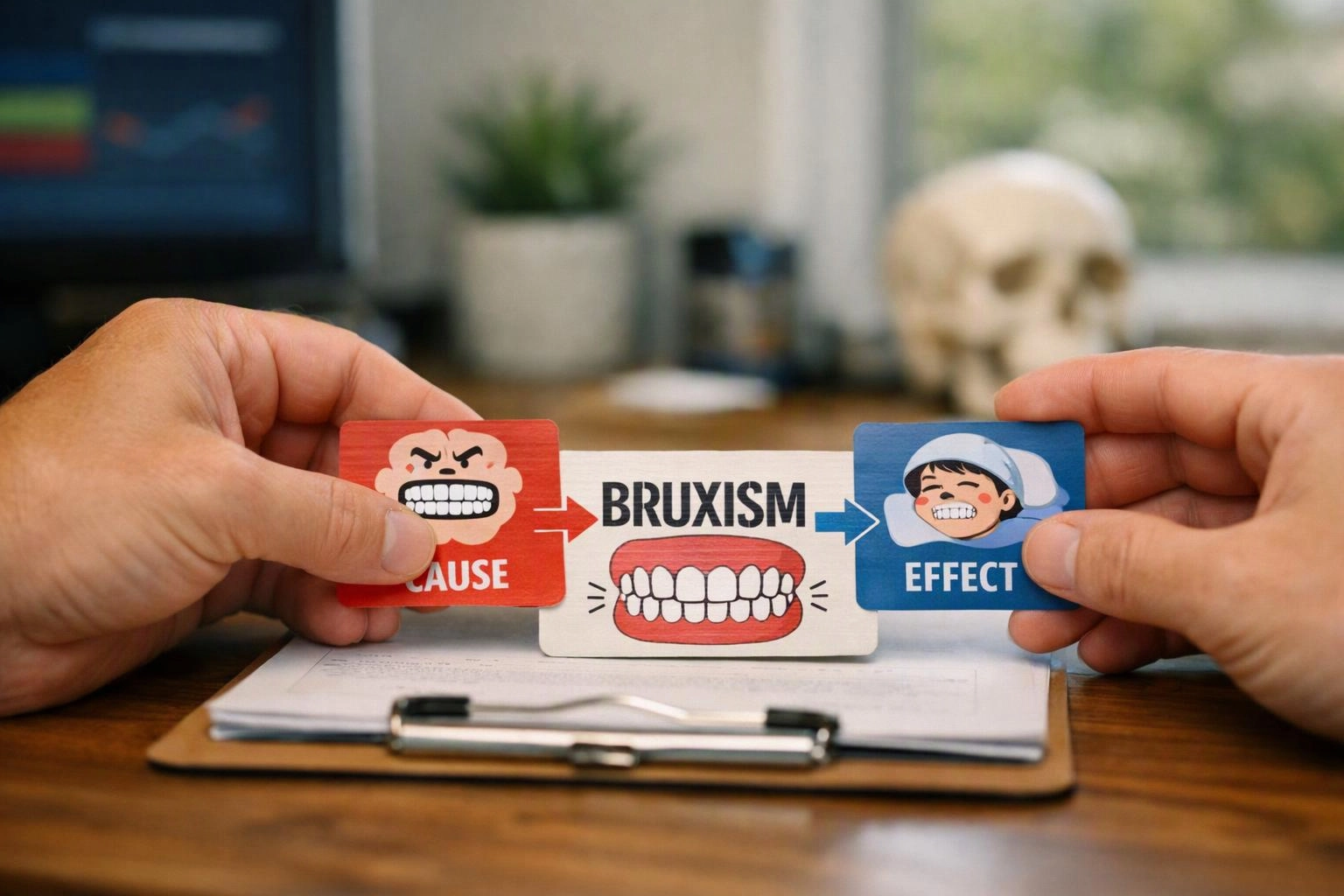
Clinicians assess bruxism by asking about grinding sounds, morning jaw fatigue, facial tension, tooth sensitivity, and changes in how the bite feels. They may also examine jaw movement, muscle tenderness, and tooth wear. Bruxism can occur alongside TMJ disorder, but the terms describe different conditions. Bruxism describes the clenching or grinding behavior, while TMJ disorder describes problems involving the jaw joints or surrounding tissues.
From the Arrowhead Clinic Chiropractor Newnan team
When we assess bruxism, we ask about jaw tension, grinding awareness, sleep patterns, and symptoms around the face and neck. We also observe jaw movement and muscle tenderness. Our team considers these findings alongside the person’s TMJ symptoms so the evaluation addresses the jaw system as a whole.
Bruxism in Practice: A Real-World Example
A person may wake with tight jaw muscles and a dull temple ache after clenching during sleep. During a TMJ Disorder Treatment evaluation, the clinician may connect those symptoms with jaw muscle tenderness and signs of repeated tooth contact.
Related Services
Related Terms
Trigger Point
A trigger point is a sensitive area within a muscle that may feel tight and produce…
Muscle Spasm
A muscle spasm is a sudden, involuntary tightening of muscle tissue that may limit movement and…
Forward Head Posture
Forward Head Posture is a postural pattern in which the head rests ahead of the shoulders…
Arrowhead Clinic Chiropractor Newnan
Have Questions About Bruxism?
Contact Arrowhead Clinic Chiropractor Newnan for practical guidance on Bruxism and related chiropractor work in Newnan.