
What Is a Cobb Angle?
Cobb Angle is a radiographic measurement used to describe the side-to-side curvature of the spine, commonly in scoliosis assessment. A clinician measures the angle formed by lines drawn along selected vertebrae on a standing spinal image. The result helps describe curve severity, monitor change over time, and support clinical planning.
Quick Facts About Cobb Angle
Category
Radiographic spinal measurement
Used for
Scoliosis curve assessment
Common confusion
Not a complete measure of posture or function
Also called
Cobb measurement, Cobb angle measurement
Often discussed with
Scoliosis Treatment
Key Takeaways About Cobb Angle
- It measures spinal curvature on a radiographic image.
- The selected vertebrae affect the reported measurement.
- Cobb Angle does not describe posture by itself.
How Cobb Angle Works
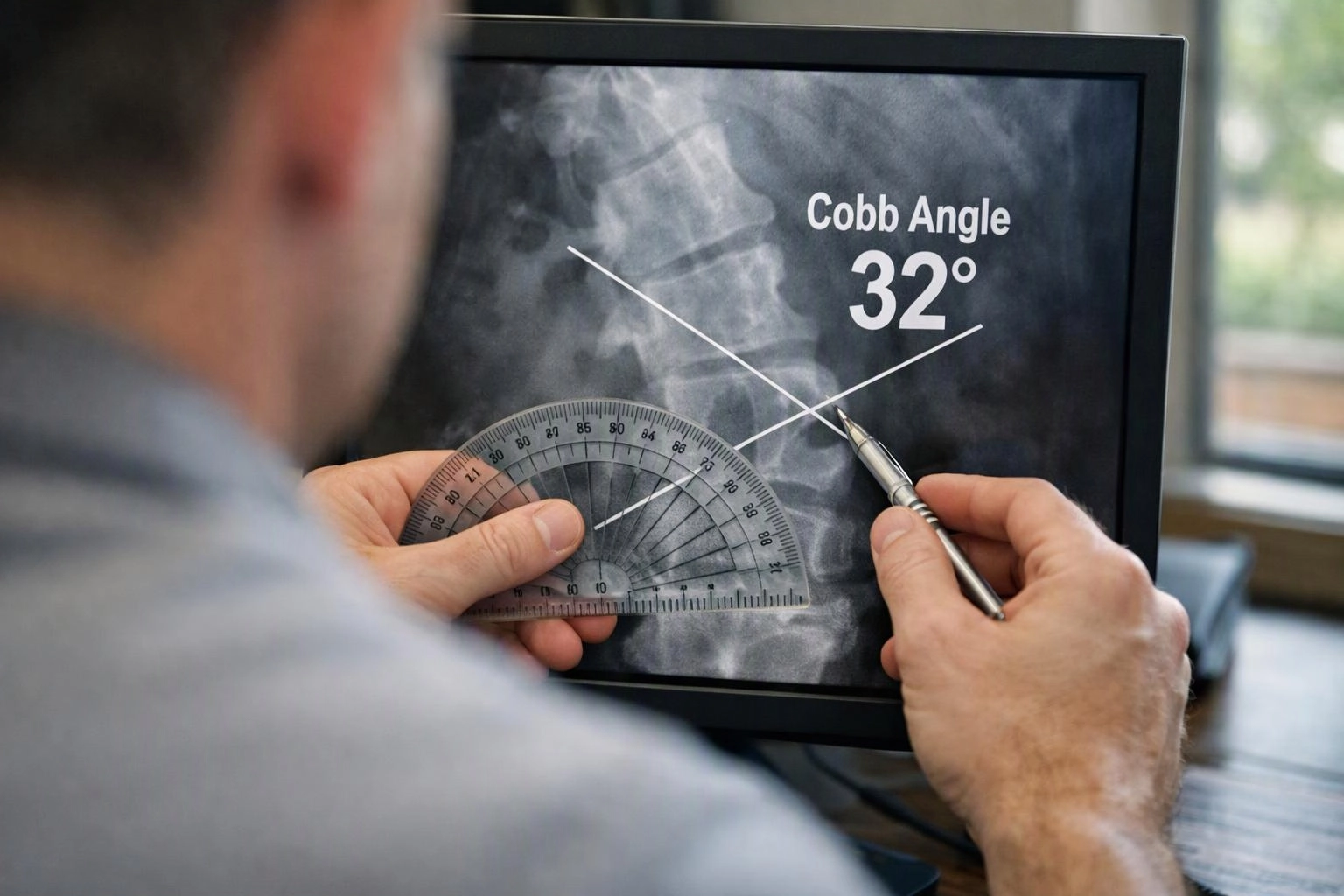
Cobb Angle is measured from a spinal image by identifying the upper and lower vertebrae that mark a curve. Lines follow the endplates of those vertebrae, and the angle where the lines meet represents the curve measurement. Consistent selection of these vertebrae supports meaningful comparison between images.
Related glossary terms: Kyphosis, Lumbar Lordosis, Cervical Lordosis.
Scoliosis assessment may consider the Cobb Angle alongside spinal alignment, posture, symptoms, growth status, and physical findings. A larger angle describes a stronger visible curve, but the measurement does not explain every effect a curve may have on movement or comfort. Changes between images also depend on similar positioning and imaging methods.
From the Arrowhead Clinic Chiropractor Newnan team
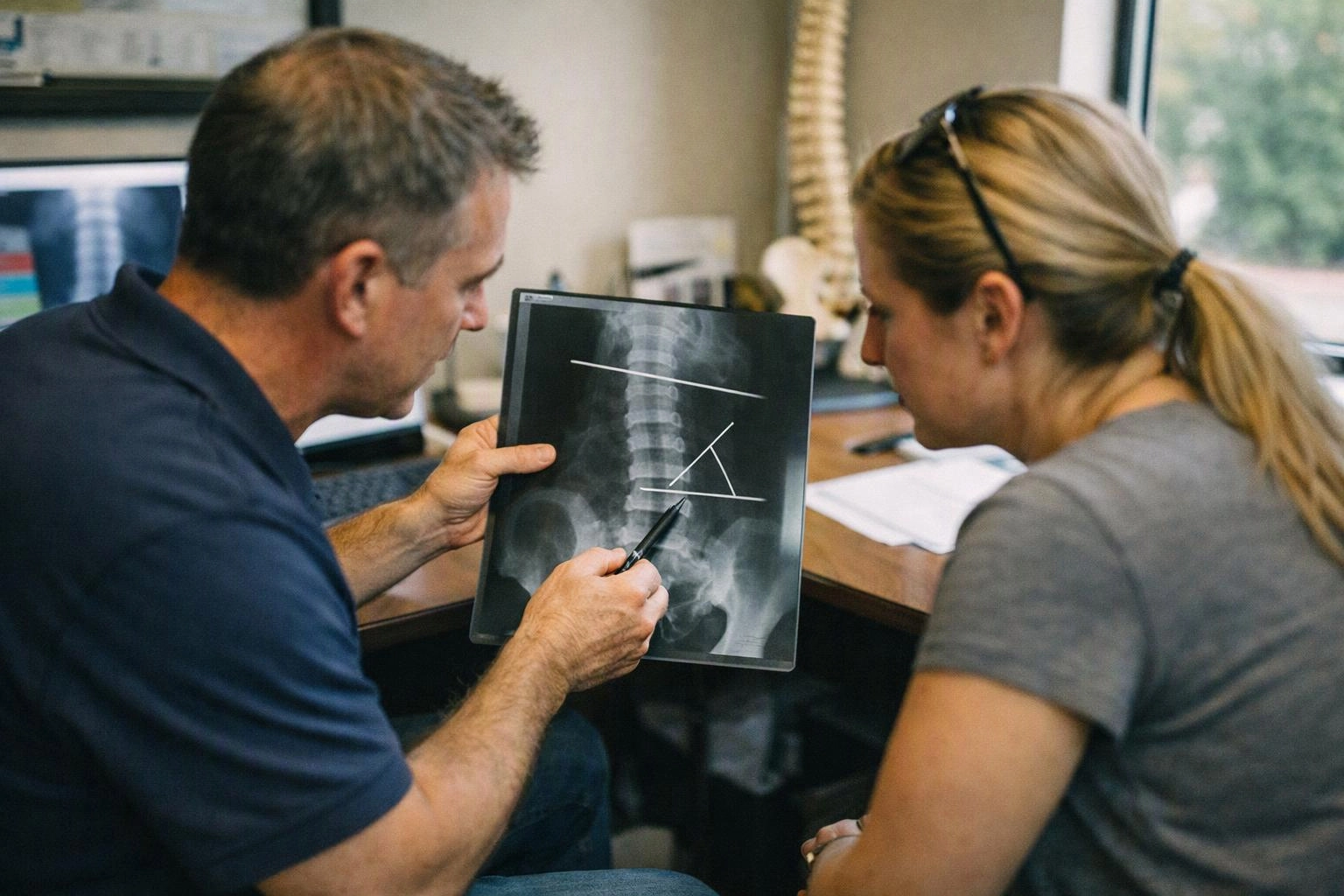
When we review scoliosis cases, we consider the Cobb Angle as one part of the clinical picture. We also examine posture, movement, reported symptoms, and available imaging. Our team uses the measurement to support discussion of the person’s spinal alignment and care goals, not as a stand-alone conclusion.
Cobb Angle in Practice: A Real-World Example
A person with a visible spinal curve brings a standing spinal image to an appointment for scoliosis treatment. The clinician reviews the Cobb Angle with posture and movement findings to understand the curve in context.
Related Services
Related Terms
Kyphosis
Kyphosis is an exaggerated outward curve of the upper spine that creates a rounded or hunched…
Lumbar Lordosis
Lumbar Lordosis is the natural inward curve of the lower spine. This curve helps position the…
Cervical Lordosis
Cervical Lordosis is the natural inward curve of the neck portion of the spine. This curve…
Forward Head Posture
Forward Head Posture is a postural pattern in which the head rests ahead of the shoulders…
Arrowhead Clinic Chiropractor Newnan
Have Questions About Cobb Angle?
Contact Arrowhead Clinic Chiropractor Newnan for practical guidance on Cobb Angle and related chiropractor work in Newnan.