
What Is Impingement Syndrome?
Impingement Syndrome is a shoulder condition in which movement narrows space around the rotator cuff tendons or nearby bursa. The narrowing can irritate these tissues during arm elevation or reaching. Symptoms often include shoulder pain, tenderness, and limited motion, but similar symptoms can have other causes and require clinical assessment for accurate identification.
Quick Facts About Impingement Syndrome
Category
Shoulder movement condition
Used for
Describing pain linked to shoulder motion
Common confusion
Often confused with rotator cuff injury
Also called
Shoulder impingement, Subacromial impingement
Often discussed with
Shoulder Pain Treatment
Key Takeaways About Impingement Syndrome
- Shoulder tissue irritation often appears during overhead movement.
- Pain location alone cannot identify the underlying cause.
- Impingement Syndrome is not the same as a rotator cuff tear.
How Impingement Syndrome Works
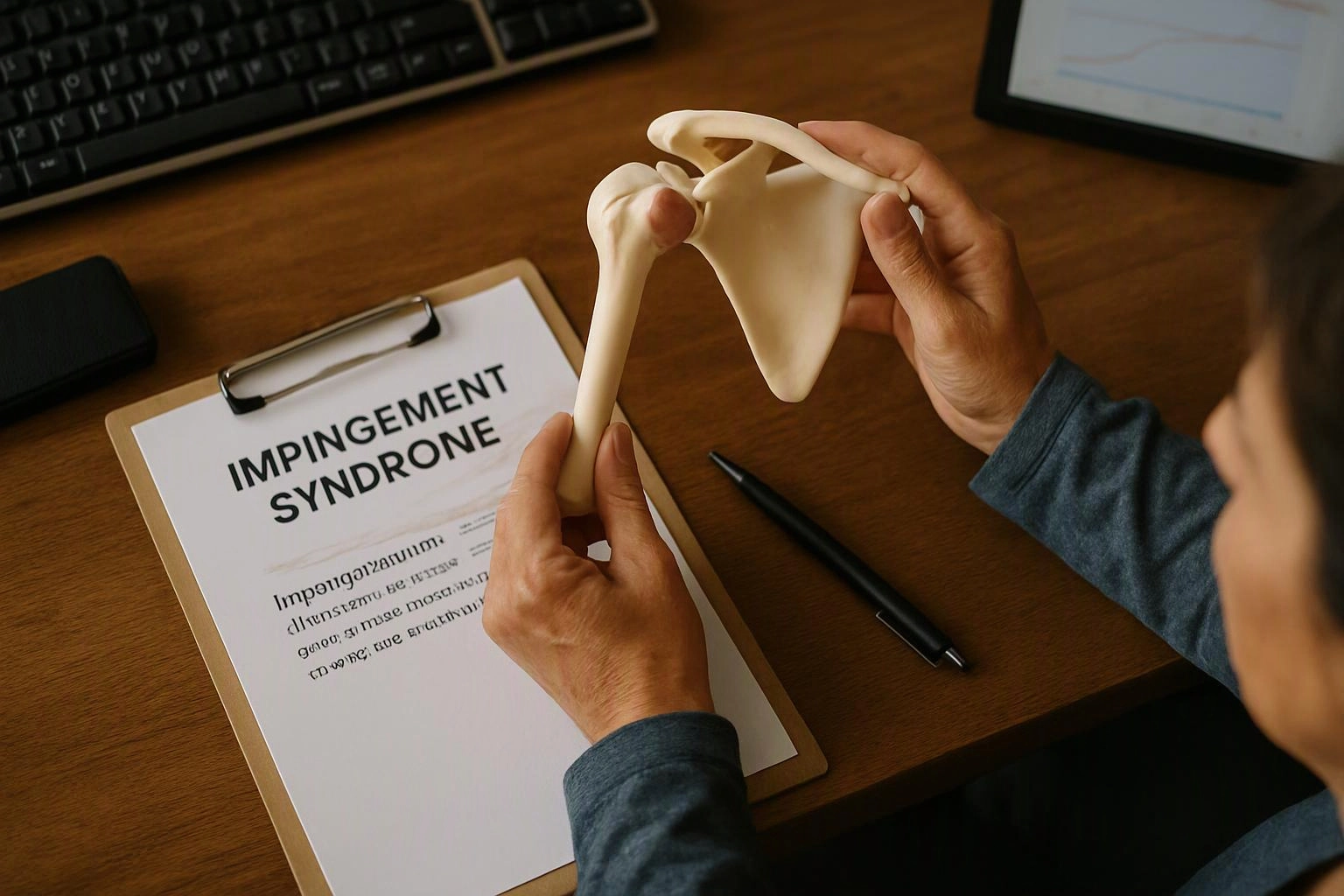
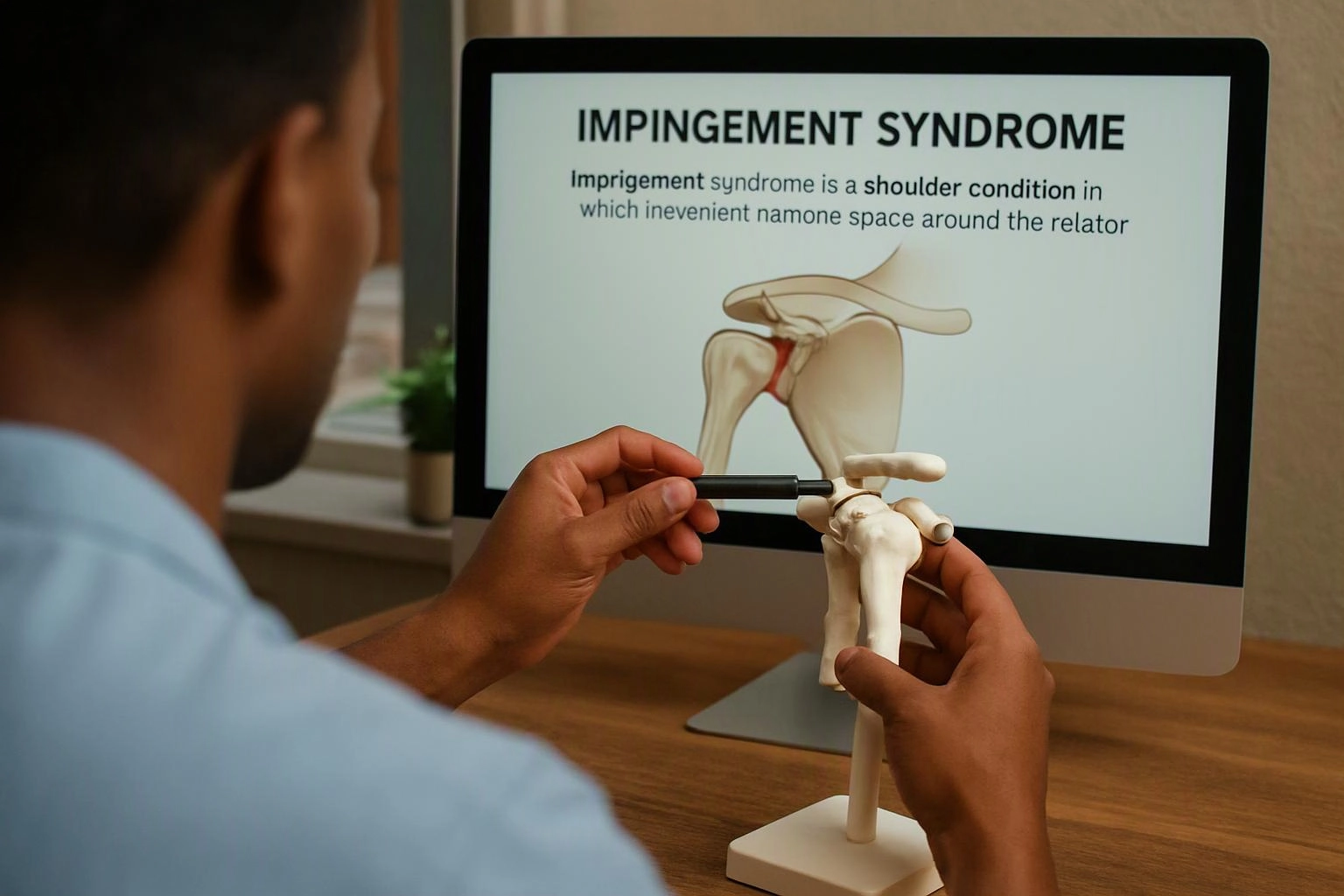
Impingement Syndrome describes contact or pressure involving tissues beneath the shoulder's acromion during certain movements. The rotator cuff tendons and the subacromial bursa help the shoulder move smoothly. Changes in shoulder motion, posture, or tissue irritation can reduce available space and make arm elevation painful.
Related glossary terms: Rotator Cuff, Trigger Point, Forward Head Posture.
A clinician considers the pain pattern, active movement, strength, and joint motion when examining this condition. The term describes a movement-related problem, not a single confirmed tissue injury. A rotator cuff problem can produce similar symptoms, so the examination also considers other shoulder or neck conditions. Treatment planning focuses on the findings that reproduce symptoms and the activities that increase them.
From the Arrowhead Clinic Chiropractor Newnan team
When we assess Impingement Syndrome, we look at shoulder motion, strength, posture, and symptom patterns together. We also consider the neck and upper back because symptoms can overlap across nearby regions. Our team uses these findings to guide care within Shoulder Pain Treatment and to identify concerns that may need further evaluation.
Impingement Syndrome in Practice: A Real-World Example
A person receiving Shoulder Pain Treatment may report pain while reaching into an overhead cabinet or putting on a shirt. The clinician examines which shoulder movements reproduce symptoms and whether weakness or neck movement changes the pattern.
Related Services
Related Terms
Rotator Cuff
Rotator Cuff is a group of muscles and tendons that surrounds the shoulder joint and helps…
Trigger Point
A trigger point is a sensitive area within a muscle that may feel tight and produce…
Forward Head Posture
Forward Head Posture is a postural pattern in which the head rests ahead of the shoulders…
Facet Joint
A facet joint is a small synovial joint located between adjacent vertebrae in the spine. Facet…
Arrowhead Clinic Chiropractor Newnan
Have Questions About Impingement Syndrome?
Contact Arrowhead Clinic Chiropractor Newnan for practical guidance on Impingement Syndrome and related chiropractor work in Newnan.