
What Is Return to Work?
Return to Work is a workplace planning process that guides an injured employee back to job duties after a work-related injury. The process may involve temporary task changes, physical capacity checks, treatment updates, and communication among the employee, employer, healthcare professionals, and claims representatives. The goal is a safe, practical transition into regular work.
Quick Facts About Return to Work
Category
Workplace rehabilitation process
Used for
Planning job-duty transitions after injury
Common confusion
Full duty and modified duty are different work statuses
Also called
Work reintegration, Work re-entry
Often discussed with
Workers' Compensation Injury Treatment
Key Takeaways About Return to Work
- It connects work duties with current physical ability.
- Temporary task changes may support a gradual workplace transition.
- Return to Work is not the same as reaching maximum recovery.
How Return to Work Works
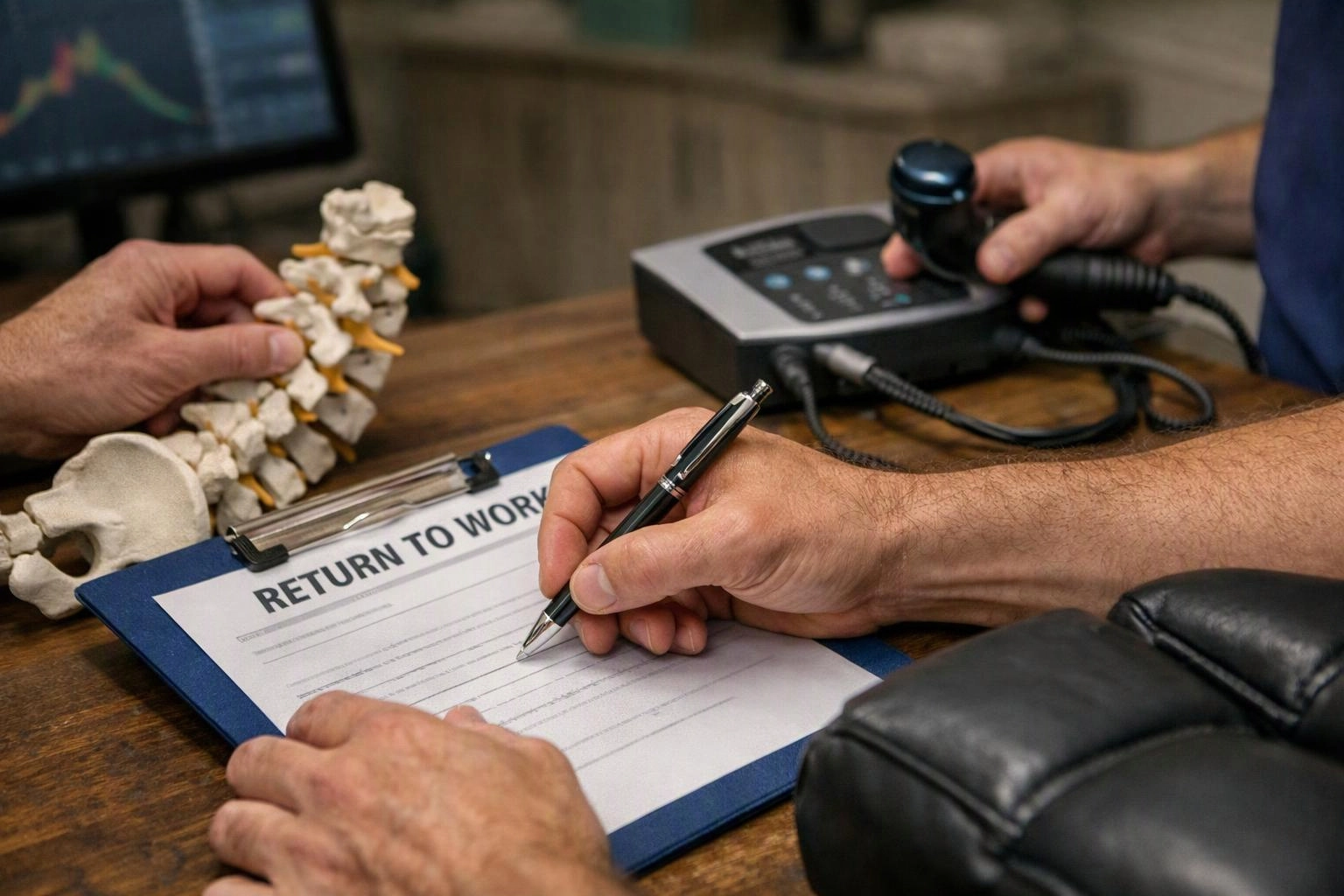
Return to Work uses information about job demands and current physical ability to guide workplace decisions. A healthcare professional may review movement, strength, pain patterns, and tolerance for tasks. The job description also matters because lifting, standing, driving, or repetitive movement can place different demands on the body.
Related glossary terms: Functional Capacity Evaluation, Ergonomic Assessment, Sprain.
The plan may support regular duties, modified duties, or a staged increase in activity. An employer can use the stated capabilities to assign suitable tasks, while the worker reports changes that affect performance. A Functional Capacity Evaluation may provide structured information about work-related abilities when a more detailed assessment is appropriate. An Ergonomic Assessment can identify workspace or task changes that reduce physical strain.
From the Arrowhead Clinic Chiropractor Newnan team
When we assess Return to Work, we connect reported symptoms and observed movement with the actual demands of the job. We review whether tasks such as lifting, reaching, sitting, or repeated movement match current ability. We also document practical limits that can help guide communication with the employer and claims team.
Return to Work in Practice: A Real-World Example
A warehouse employee recovering from a work-related back strain may return to selected duties that limit heavy lifting and repeated bending. As movement and tolerance improve, the worker may resume more demanding tasks according to the care team’s assessment and workplace plan.
Related Services
Related Terms
Functional Capacity Evaluation
A Functional Capacity Evaluation is a structured assessment of physical abilities related to work demands. A…
Ergonomic Assessment
An Ergonomic Assessment is a structured review of how a person’s posture, movements, workspace, and daily…
Sprain
Sprain is a ligament injury caused by stretching or tearing the tough bands that connect bones…
Muscle Spasm
A muscle spasm is a sudden, involuntary tightening of muscle tissue that may limit movement and…
Arrowhead Clinic Chiropractor Newnan
Have Questions About Return to Work?
Contact Arrowhead Clinic Chiropractor Newnan for practical guidance on Return to Work and related chiropractor work in Newnan.