What Is Torticollis?
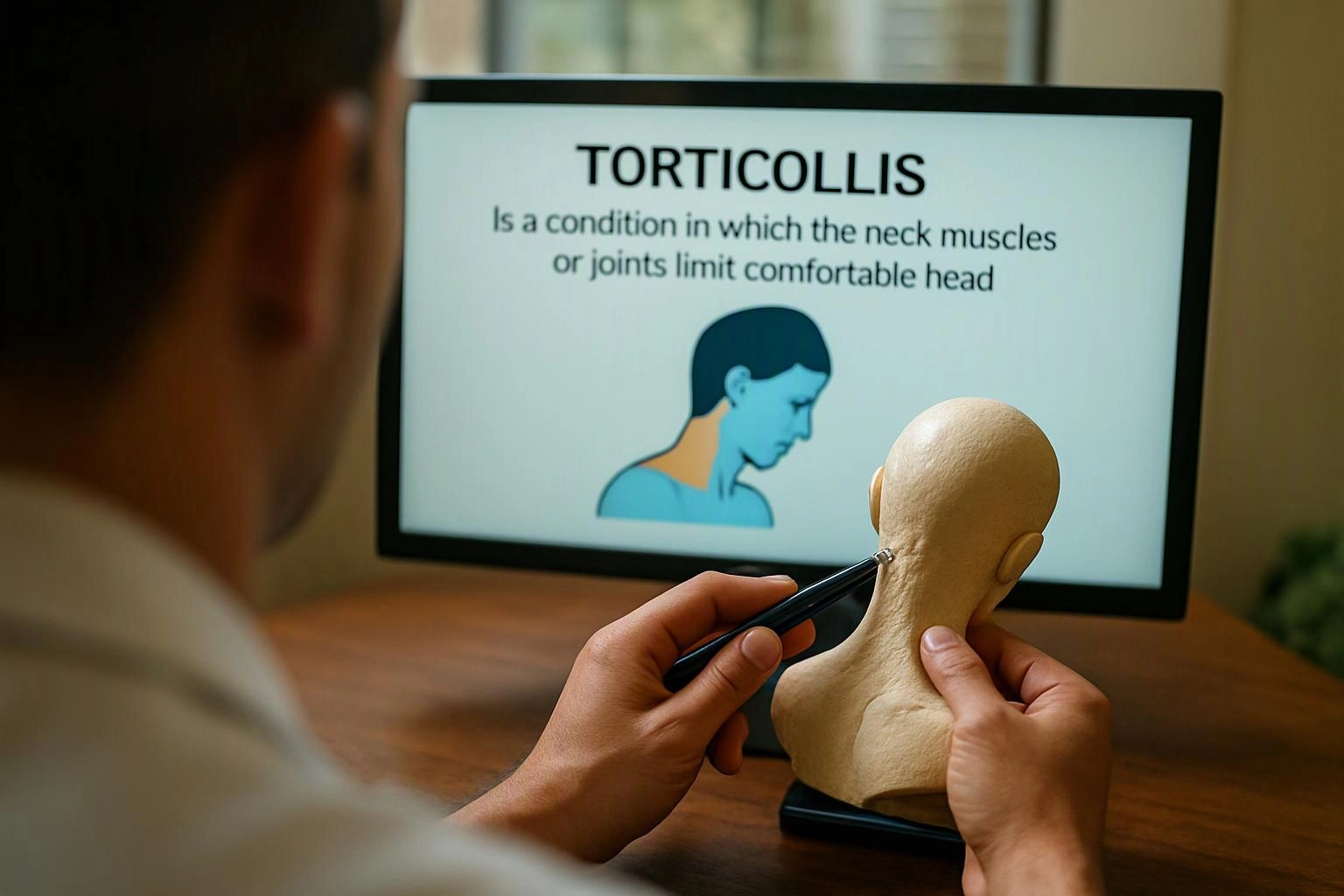
Torticollis is a condition in which the neck muscles or joints limit comfortable head movement, causing the head to tilt toward one side while the chin turns toward the opposite side. In infants, torticollis may affect feeding position, head control, or the development of balanced neck movement. In older children, injury or muscle tension may contribute.
Quick Facts About Torticollis
Category
Neck movement condition
Used for
Describing restricted, uneven head and neck position
Common confusion
Ordinary neck soreness
Also called
Wry neck, Loxia
Often discussed with
Pediatric Chiropractic Care
Key Takeaways About Torticollis
- The head tilts while the chin turns in the opposite direction.
- Infant torticollis may affect feeding position and head control.
- Torticollis is not the same as ordinary neck soreness.
How Torticollis Works

Torticollis changes how the neck muscles and joints coordinate head position. Tightness on one side can pull the head into a tilt, while limited motion can turn the chin away from that side. The result may appear during rest, feeding, play, or ordinary movement.
Related glossary terms: Muscle Spasm, Cervical Lordosis, Forward Head Posture.
Assessment focuses on head position, active neck movement, muscle balance, and related posture. In pediatric care, the child’s age, movement patterns, and daily positions help show how the condition affects function. Congenital muscular torticollis begins early in life, while acquired torticollis may follow irritation, strain, or another health problem. Plagiocephaly can occur alongside infant torticollis, but the terms describe different findings.
From the Arrowhead Clinic Chiropractor Newnan team
When we assess torticollis, we observe head position and compare neck movement from side to side. We also consider posture during age-appropriate activities, such as tummy time or feeding. Our team uses those findings to guide pediatric chiropractic care that matches the child’s presentation.
Torticollis in Practice: A Real-World Example
A newborn may keep the head turned toward one side during feeding and show less comfortable movement toward the other side. Pediatric chiropractic care may document the child’s posture and neck mobility while considering how those findings affect daily positioning.
Related Services
Related Terms
Muscle Spasm
A muscle spasm is a sudden, involuntary tightening of muscle tissue that may limit movement and…
Cervical Lordosis
Cervical Lordosis is the natural inward curve of the neck portion of the spine. This curve…
Forward Head Posture
Forward Head Posture is a postural pattern in which the head rests ahead of the shoulders…
Trigger Point
A trigger point is a sensitive area within a muscle that may feel tight and produce…
Arrowhead Clinic Chiropractor Newnan
Have Questions About Torticollis?
Contact Arrowhead Clinic Chiropractor Newnan for practical guidance on Torticollis and related chiropractor work in Newnan.