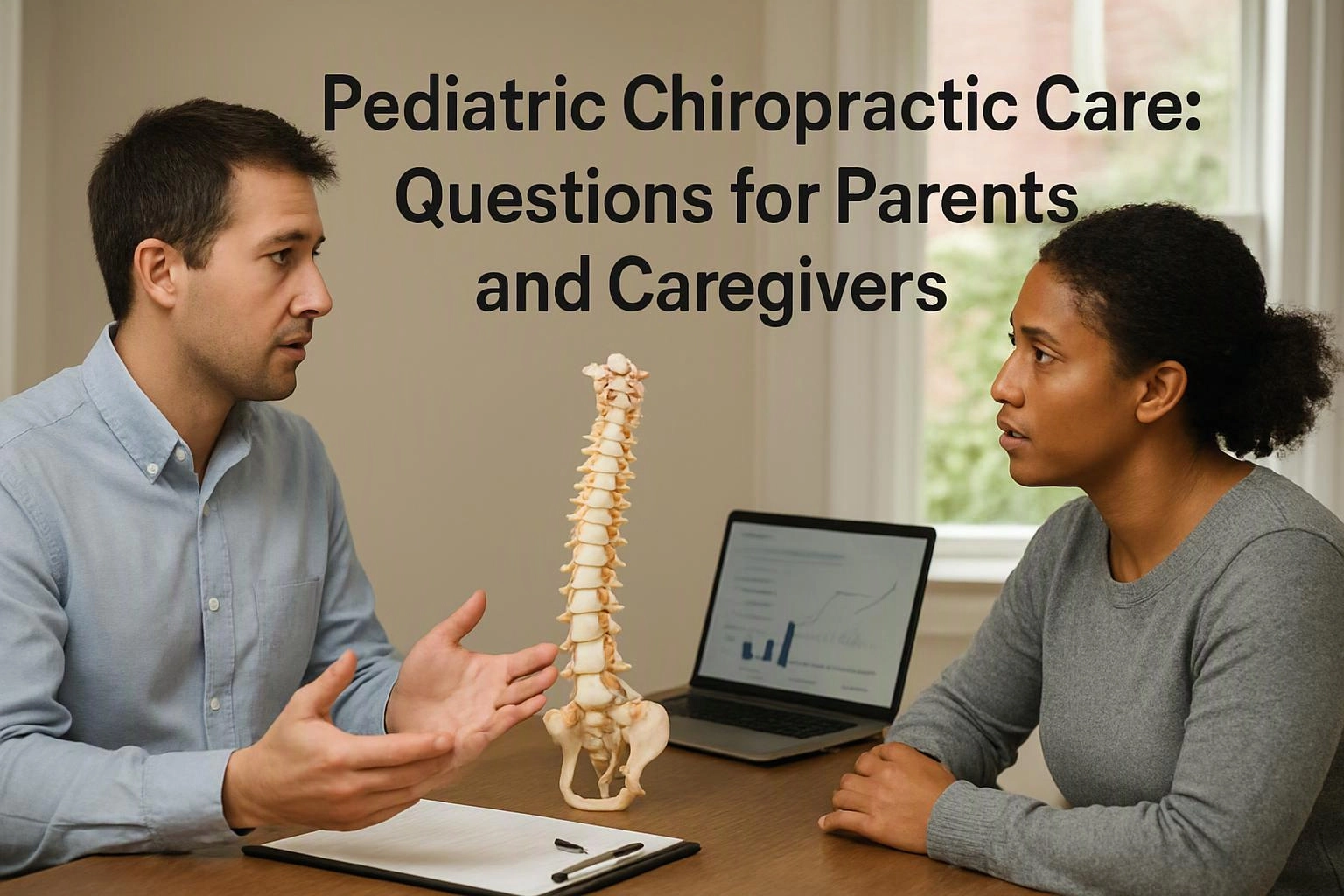
Pediatric Chiropractic Care: Questions for Parents and Caregivers
Pediatric chiropractic care should begin with a careful health history, age-appropriate assessment, clear communication, and coordination with the child's medical team when needed. Arrowhead Clinic Chiropractor Newnan uses caregiver questions to discuss whether care is appropriate, what an evaluation involves, and when another healthcare professional should be consulted.
Book a Free ConsultationWhat Is Pediatric Chiropractic Care?
Pediatric chiropractic care is a form of chiropractic evaluation and care adapted to a child's age, development, health history, and reason for the visit.
Arrowhead Clinic Chiropractor Newnan considers how the child's musculoskeletal system relates to movement, posture, comfort, and daily activities. We begin with caregiver concerns and the child's health history before discussing whether age-appropriate care may be suitable.
Children may communicate symptoms differently from adults. Our team uses child-friendly assessment methods and clear caregiver communication to support an informed decision.
Which Signs Should Prompt a Caregiver to Ask Questions?
Changes in movement, posture, activity, sleep, or comfort can give caregivers a reason to discuss an evaluation, while urgent or severe symptoms require medical attention.
Caregivers can note when symptoms appear, what activities affect them, and whether the changes continue. These observations help us understand the child's concerns.
What Can Cause a Child’s Musculoskeletal Discomfort?
A child's musculoskeletal discomfort can relate to activity, accidental impact, repetitive movement, or sustained positions, so the cause must be considered before care is discussed.
We ask about recent events, daily routines, and symptom changes before planning care. A cause that needs medical evaluation must be addressed by the appropriate healthcare team.
How Can Caregivers Support Healthy Movement?
Caregivers can support healthy movement by encouraging age-appropriate activity, varied positions, movement breaks, restorative sleep, and attention to recurring discomfort.
Small changes in movement habits can help children notice how daily activities affect comfort. We also encourage caregivers to share ongoing concerns during a consultation.
How Does Arrowhead Clinic Chiropractor Newnan Evaluate a Pediatric Patient?
Arrowhead Clinic Chiropractor Newnan begins with the caregiver's concerns and the child's health history, then determines whether an age-appropriate chiropractic evaluation is suitable or whether medical referral is needed.
Our team uses a caregiver interview to understand symptom changes, development, activities, prior injuries, and relevant health information. We explain each part of the visit in language the child can understand.
A physical assessment may consider movement, posture, comfort, and function in a way that fits the child's age and ability to participate. We discuss what we observe before proposing any care.
If the findings suggest a concern outside our scope of care, we recommend medical referral and coordination with the child's healthcare team.
What Questions Should Caregivers Ask Before Care?
Caregivers should ask what the evaluation found, what care is being proposed, what alternatives exist, how progress will be discussed, and when another clinician should be involved.
Clear questions support informed consent and help parents and caregivers understand the care plan discussion.
What Should Caregivers Know About Safety and Scope?
Pediatric chiropractic care should stay within an appropriate scope, use an individualized assessment, and include medical referral when symptoms fall outside chiropractic care or raise safety concerns.
Pediatric safety depends on a complete health history, careful screening, age-appropriate communication, and caregiver involvement. We explain what we are assessing and invite questions before care is discussed.
Informed consent means caregivers understand the proposed approach and can make a decision without pressure. Caregivers can pause or decline care when they have concerns.
Medical red flags, significant health conditions, or symptoms that do not fit musculoskeletal care may require coordination with the child's medical team. Our referral decision is guided by the child's presentation and the limits of our scope of chiropractic care.
When Should a Child Receive Medical Evaluation First?
A child should receive medical evaluation first when symptoms suggest serious injury, systemic illness, neurological change, breathing difficulty, or another urgent health concern.
Urgent symptoms can include severe or rapidly worsening pain, a serious injury, fever with concerning symptoms, new weakness or loss of coordination, unusual alertness changes, or breathing difficulty. Caregivers should use emergency services for an immediate emergency.
We do not use chiropractic care to delay needed medical evaluation. When symptoms raise concern, we direct caregivers toward appropriate medical care and coordinate with the healthcare team when appropriate.
How Can Caregivers Arrange a Pediatric Chiropractic Discussion?
Caregivers can contact Arrowhead Clinic Chiropractor Newnan to discuss the child's concerns, provide relevant health history, and ask whether a pediatric chiropractic consultation is appropriate; Free Consultations are available.
Prepare appointment questions about symptoms, movement changes, prior injuries, current care, and any concerns about safety. Our team can explain what a consultation involves and whether an age-appropriate assessment is suitable.
Contact our team to begin a caregiver consultation.
Questions About Pediatric Chiropractic Care
Can chiropractic care replace a child's regular medical care?
Arrowhead Clinic Chiropractor Newnan provides chiropractic assessment and care, but chiropractic care does not replace a child's regular medical care. Children should continue appropriate medical checkups and receive medical evaluation when symptoms suggest illness, serious injury, or another concern outside chiropractic care.
Should a parent bring a child's medical records to a chiropractic consultation?
Parents should bring relevant medical records, medication information, imaging reports, and details about prior injuries when available. This information helps us review the child's health history and decide whether a chiropractic evaluation is appropriate.
What should a caregiver do if a child's symptoms worsen after an appointment?
Caregivers should contact our team about worsening symptoms and seek prompt medical evaluation when symptoms are severe, sudden, or accompanied by medical red flags. We can discuss the symptom change and help determine whether further medical care is needed.
Can caregivers stop pediatric chiropractic care if they have concerns?
Yes, caregivers can pause or stop pediatric chiropractic care if they have concerns. Caregiver communication matters, so we encourage parents and caregivers to share questions, discuss symptom changes, and request clarification before deciding what to do next.