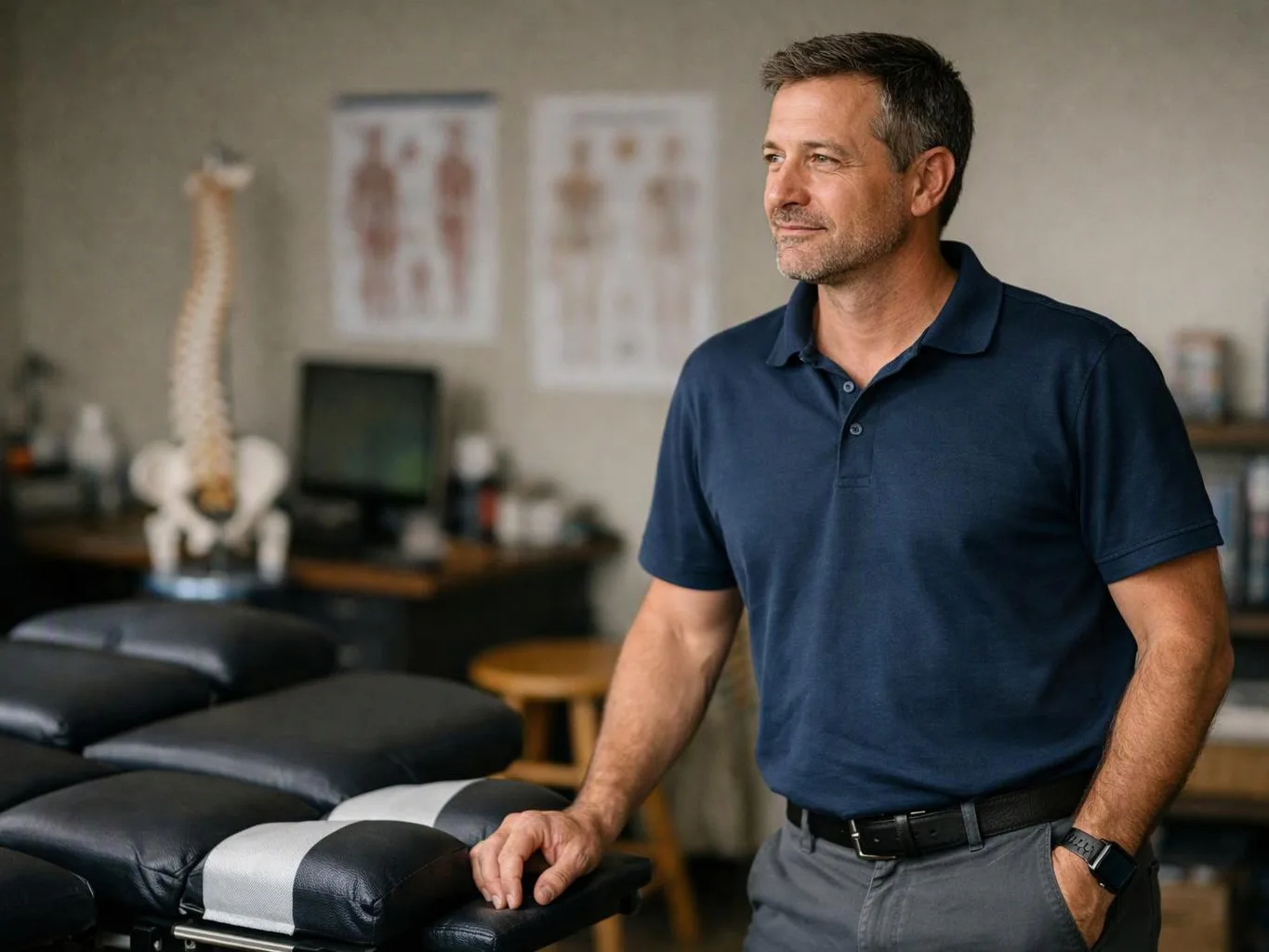
Workers' Compensation Injury Treatment: Preparing for Care and Work Discussions
Workers' Compensation Injury Treatment begins with documenting the injury, gathering medical and work records, confirming claim details, and preparing questions about care and work restrictions. Arrowhead Clinic Chiropractor Newnan reviews your symptoms and history, explains care considerations, and helps you prepare for discussions with your employer and claim representatives.
Book a Free ConsultationWhat Should You Know Before Workers' Compensation Injury Treatment?
Workers' compensation injury treatment should begin with a clear account of the injury, current symptoms, prior conditions, and claim-related questions.
A workplace injury may affect your back, neck, joints, or other parts of the musculoskeletal system. During a chiropractic evaluation, we review your symptom history and medical history before discussing care considerations.
Our team connects the clinical findings with the information you may need for your workers' compensation claim. We can also help you prepare questions for your employer and claim administrator.
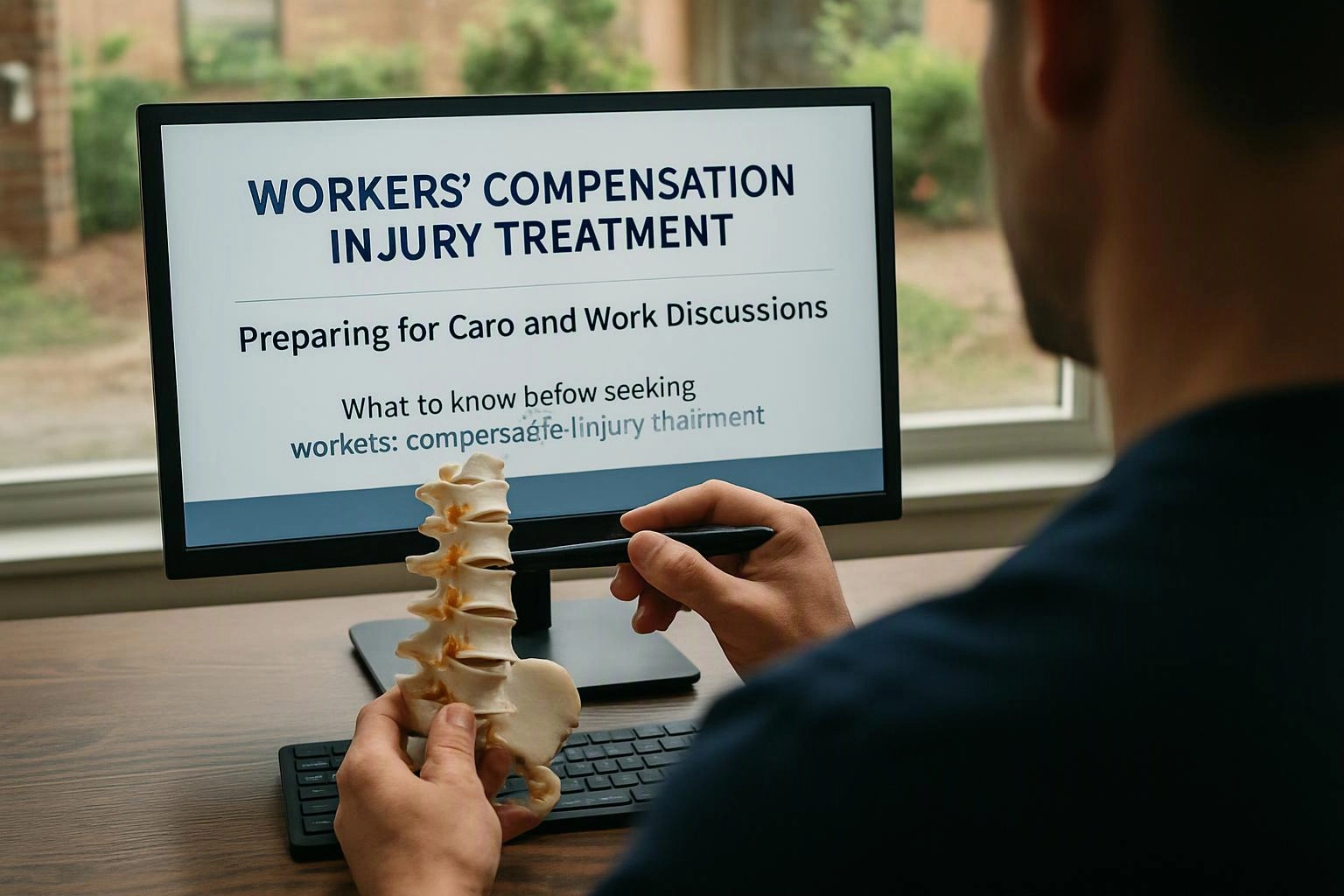
Before Your Appointment: Prepare Your Injury Information
Before a workplace injury appointment, organize the facts that help us understand what happened and how your symptoms affect daily activities. Clear information also supports consistent claim communication.
Bring questions about care authorization, medical documentation, and work status. Our team can review the information you provide and explain what the clinical visit covers.
What Does a Chiropractic Injury Evaluation Cover?
A chiropractic injury evaluation reviews the injury history, symptoms, movement, and musculoskeletal findings so we can explain appropriate care considerations.
Our chiropractic examination may include observation of posture and movement, range of motion, tenderness, and other findings related to a musculoskeletal injury. We ask how back pain, neck pain, or other symptoms affect your normal activities and job demands.
These findings help us discuss treatment goals and a treatment plan. We also explain when care coordination or additional medical evaluation may be appropriate.
Our approach to chiropractic care focuses on your reported symptoms, examination findings, and work-related concerns. We document relevant information so your care discussions are based on current clinical information.
During Your Appointment: Ask Questions About Care and Coverage
During a workers' compensation injury appointment, ask how the proposed care connects with your symptoms, goals, and claim requirements. These questions can make communication with the claim administrator more organized.
Coverage decisions can depend on claim status, authorization requirements, and the care plan. We explain the clinical side of your visit and help you identify questions for the appropriate claim representative.
How Should You Discuss Work Restrictions After an Injury?
Work restrictions should describe the activities your injury affects and should be discussed with the treating team and employer using current clinical information.
Tell us which job demands increase your symptoms. Relevant activities may include lifting, bending, sitting, or standing, depending on your work duties and injury.
Modified duty may be appropriate when your current abilities do not match your usual job demands. We use examination findings and your symptom report to discuss work status information that can support employer communication.
Give your employer current work guidance through the appropriate communication channel. Do not change restrictions on your own when symptoms improve or worsen; contact the treating team so the change can be reviewed.
After Your Visit: Follow the Care and Communication Plan
After a workplace injury visit, follow the care plan and keep the people handling your treatment and claim informed. Consistent records help connect symptom changes with treatment progress and work status.
Our team uses follow-up visits to reassess your condition and update care discussions when appropriate. Keep copies of treatment records and provide them to the people who are authorized to manage your claim.
When Should a Workplace Injury Receive Prompt Medical Attention?
A workplace injury should receive prompt medical attention when symptoms are severe, worsening, or linked with changes in sensation, strength, or coordination.
Call emergency services for symptoms that may represent a medical emergency. For other concerning changes, contact our team or the appropriate medical service promptly so the next step is clear.
Workers' Compensation Treatment or Self-Care: How Do You Decide?
A workplace injury that persists, worsens, limits movement, or affects job duties should be evaluated rather than managed only with self-care.
Self-care may be reasonable for minor, short-lived discomfort when no concerning symptoms are present. A workplace injury evaluation becomes more important when pain continues, symptoms change, or you cannot perform normal tasks safely.
Back pain and neck pain can have different causes and may need a clinical assessment. We review your injury documentation, symptom history, and movement findings before explaining care considerations.
Early documentation can also help you describe the work-related injury accurately. Our team can discuss chiropractic care and help you understand what information belongs in your treatment records.
How Can You Compare Workplace Injury Treatment Options?
Workplace injury treatment options should be compared by the type of evaluation needed, the symptoms involved, and the documentation or work-status questions that must be addressed.
| Option | May help with | Questions to clarify |
|---|---|---|
| Chiropractic care | Musculoskeletal symptoms, movement concerns, and care planning | What findings support the treatment plan and what work guidance is appropriate? |
| Primary care | General medical review and broader health concerns | How will the work injury and related medical records be addressed? |
| Urgent care | Prompt review of acute symptoms or injury concerns | What follow-up is needed after the initial evaluation? |
| Specialist referral | Further assessment when symptoms or findings require another type of care | Who will coordinate records, authorization, and work restrictions? |
We focus on the clinical evaluation that matches your reported symptoms and examination findings. Your claim documentation and work restrictions should remain consistent with current medical information.
How Do You Prepare for the Cost and Coverage Conversation?
Workers' compensation treatment costs depend on claim status, coverage requirements, authorization, and the care plan; ask Arrowhead Clinic Chiropractor Newnan what the visit and next steps include, with Free Consultations available.
Ask whether the claim administrator has accepted the claim, whether authorization is required, and how a deductible or out-of-pocket responsibility may apply. We can explain what our visit and proposed treatment plan include, while the claim administrator addresses coverage decisions.
Use our Workers' Compensation Injury Treatment service information to contact our team and request details for your situation.
What Records Should You Keep After Treatment Begins?
Workers' compensation records should include treatment information, work-status guidance, claim correspondence, and changes in symptoms or job duties.
Keep appointment records, work status documentation, employer communication, and claim correspondence together. A symptom journal can show when pain, numbness, or weakness changes and what activities affect it.
Save treatment instructions and copies of forms sent to the claim administrator. Our team can explain the clinical information recorded during visits and help you understand what should be discussed with the people managing your claim.
Questions About Workers' Compensation Injury Treatment
What should I bring to a workers' compensation injury appointment?
Arrowhead Clinic Chiropractor Newnan recommends bringing your claim information, employer details, medical records, medication information, and a written symptom history to a workers' compensation injury appointment.
Can chiropractic care help with work-related back or neck pain?
Yes, chiropractic care may help address work-related back or neck pain when the symptoms and examination findings support musculoskeletal care. We review your history and movement before discussing a treatment plan.
What should I tell my employer about my work restrictions?
Tell your employer which current work restrictions affect job demands such as lifting, bending, sitting, or standing. Share work-status guidance through the appropriate communication channel and report changes to the treating team.
What happens if my workplace injury symptoms change after treatment begins?
Contact the treating team when workplace injury symptoms change after treatment begins so the change can be assessed and documented. New severe pain, numbness, weakness, or loss of coordination requires prompt medical attention.
Who should receive my workers' compensation treatment records?
Workers' compensation treatment records should be sent only to authorized recipients involved in your care, employer communication, or claim administration. Arrowhead Clinic Chiropractor Newnan can explain the clinical records prepared during your visits and help you identify the appropriate request process.
Arrowhead Clinic Chiropractor Newnan helps you prepare for workers' compensation injury treatment, clinical evaluation, claim communication, and work-status discussions. Contact our team to discuss your symptoms and next steps.
Get a Free EstimateRelated Resources
Back Pain Treatment and Posture Correction: Can Better Alignment Reduce Recurring Pain?
Compared ToHow to Compare Chiropractic Care With Other Treatment Options
What It SolvesQuestions to Ask About Chiropractic Care for Back, Neck, and Nerve Symptoms
Brand vs BrandWorkers' Compensation Injury Treatment Companies Worth Comparing in Newnan (2026)