Sports Injury Treatment: Evaluation, Recovery Tracking, and Return to Sport
Sports injury treatment helps identify the problem, protect daily function, track recovery, and plan a gradual return to sport; Arrowhead Clinic Chiropractor Newnan evaluates movement and develops care around your symptoms and goals.
Book a Free ConsultationWhat to Do When a Sports Injury Affects Daily Activities
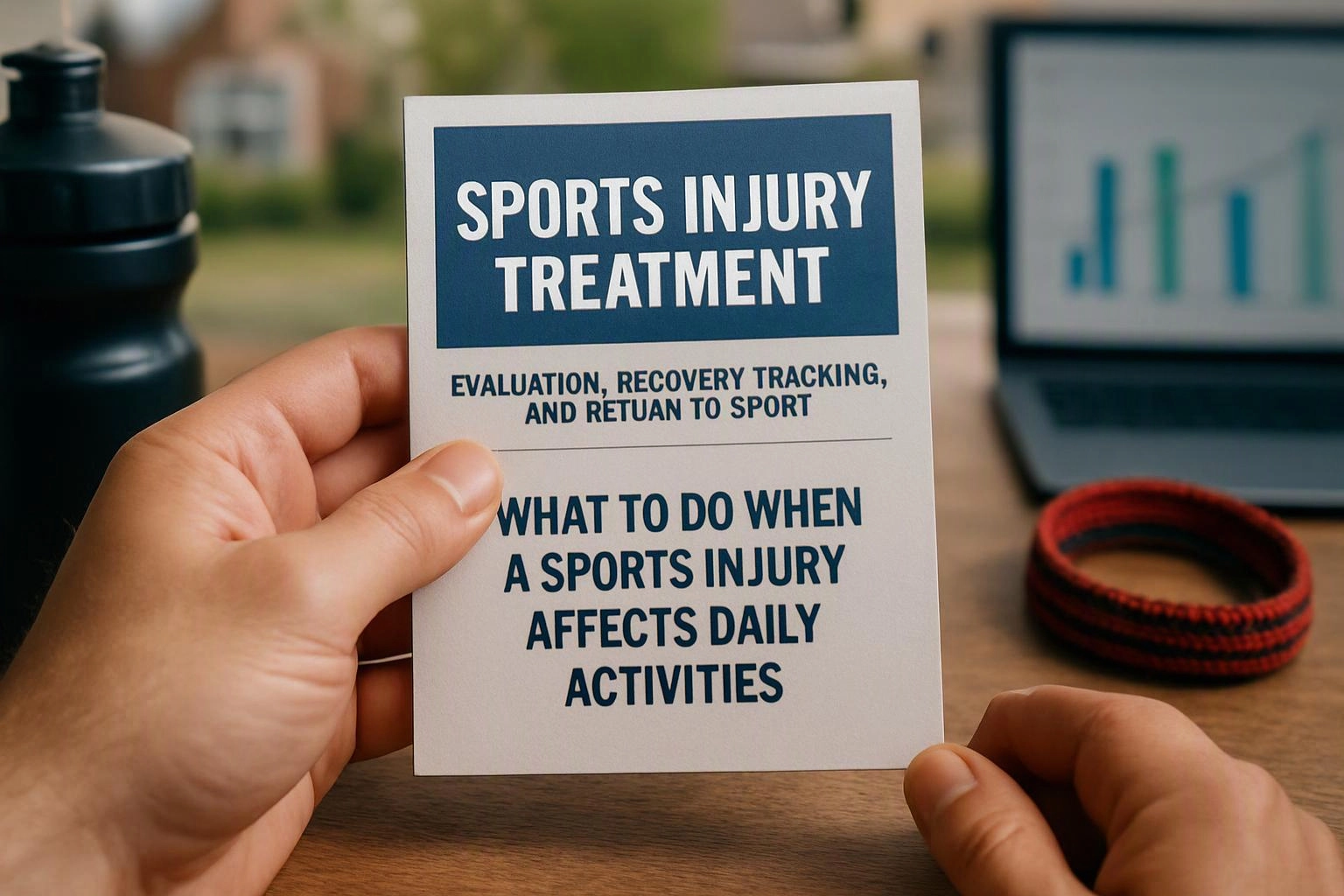
Sports injury treatment should begin with protecting the affected area, noting which activities are limited, and arranging an evaluation when symptoms interfere with normal movement. Arrowhead Clinic Chiropractor Newnan connects your symptoms with a careful chiropractic evaluation.
A sports injury can affect walking, sitting, lifting, sleeping, working, or exercising. Use activity modification to avoid movements that sharply increase pain, but keep gentle movement within your comfort when it does not worsen symptoms.
Our team can assess movement limits and help identify whether the problem may involve joint function, muscle function, or another musculoskeletal concern. Severe symptoms or signs of a serious injury may require medical evaluation.
Which Signs and Symptoms Should You Track?
Sports injury symptoms should be tracked by noting what you feel, what movement changes, and which daily tasks become harder. Clear notes help our team compare your starting concerns with later function.
Record which activities trigger symptoms and whether the response settles with rest or continues afterward. Bring these observations to our sports injury evaluation.
What Commonly Causes Sports Injuries?
Sports injuries commonly develop from a sudden event, repeated stress, poor movement mechanics, or insufficient recovery. Our team looks at these factors so treatment addresses more than the painful area.
Understanding the cause helps us choose useful treatment goals and activity changes. We also consider how training load, mobility, strength, and prior injuries affect your symptoms.
How We Evaluate a Sports Injury
Sports injury evaluation connects your symptoms with movement and joint-function findings so our team can determine which activities need modification and which treatment goals matter first.
We begin with your symptom history, including when the problem began, what caused it, and how it affects daily function. We then complete a movement assessment to observe mobility, control, balance, and pain response.
Our evaluation may consider joint function and muscle function around the affected area. Shoulder pain, knee pain, and hip pain can each change how you move, so we assess the surrounding movement pattern instead of focusing only on the location of pain.
Our approach to Sports Injury Treatment is shaped by your symptoms, activity needs, and recovery plan. We explain what we find and how each care recommendation connects with your goals.
How to Prepare for a Sports Injury Evaluation
Preparing for a sports injury evaluation means bringing information that shows how the injury started and how it affects your routine. Useful details help our team make the visit focused and practical.
Wear clothing that allows the affected area to move comfortably. You can also bring questions about home activity guidance, care options, and return-to-sport planning.
How Sports Injury Treatment Supports Recovery Tracking
Sports injury recovery tracking compares symptoms and function over time so our team can adjust care when movement, strength, or activity tolerance changes.
We use your recovery plan to connect care with functional goals. These goals may include improved range of motion, better strength, easier walking, or greater tolerance for work and training.
Symptom tracking should include pain response, stiffness, swelling, movement quality, and how you feel after activity. A change in pain alone does not always show whether daily function or sport readiness has improved.
Our team reviews your progress and modifies activity guidance when your response changes. This supports informed decisions about the next stage of recovery.
When Can You Return to Sport?
Return to sport should follow improving function and tolerance for sport-specific movement, not only a reduction in pain.
Our team considers how you perform movements that match your sport, how your body responds to increased load, and whether weakness or limited mobility remains. A return-to-sport plan may use gradual load progression so your body can adapt without a sudden increase in demand.
Pain response matters, but functional readiness also includes movement control, strength, balance, and activity tolerance. We help you understand which signs support progress and which signs mean the activity should be modified.
How Sports Injury Treatment Compares With Rest and Self-Care
Sports injury treatment adds clinical evaluation and recovery monitoring to the activity choices you make at home. Rest and self-care may support comfort, while treatment helps clarify movement limits and functional goals.
| Approach | Primary focus | How it supports decisions |
|---|---|---|
| Rest | Reducing demand on the affected area | May help settle symptoms while you observe your response |
| Activity modification | Changing tasks or training that increase symptoms | Keeps daily movement within a more manageable level |
| Self-care | Comfort measures and gentle movement | Helps you monitor changes between visits |
| Chiropractic treatment | Evaluation, movement, joint function, and care planning | Connects symptoms with functional goals and recovery monitoring |
Self-care may be reasonable for mild symptoms that improve with reduced activity. We recommend an injury evaluation when symptoms persist, worsen, or interfere with normal movement.
How Sports Injury Treatment Relates to Physical Therapy
Sports injury treatment and physical therapy can address different parts of recovery, so the appropriate approach depends on the injury, functional limitations, and rehabilitation needs.
Chiropractic care may include manual care and movement-focused recommendations based on your evaluation. Physical therapy commonly emphasizes therapeutic exercise, progressive strengthening, mobility, and functional retraining.
Our team considers whether coordination of care would support your recovery goals. When rehabilitation needs extend beyond our approach, we help you understand what type of care may fit the next stage.
How to Help Prevent Another Sports Injury
Sports injury prevention depends on preparing for movement, managing training demands, and allowing recovery between physical efforts. We review these factors when they relate to your injury and activity goals.
Prevention is not a guarantee that another injury will not occur. Our team can help you identify movement or recovery factors that may raise stress on the affected area.
How to Choose Sports Injury Treatment
Sports injury treatment options should be compared by how clearly they evaluate the injury, address daily limitations, monitor progress, and support your activity goals.
Start with a clinical evaluation that connects your symptoms with movement assessment, joint function, and muscle function. Then ask how the treatment goals will be measured and how care may change as your function improves.
Our team uses symptom monitoring and recovery tracking to guide decisions about activity modification and return-to-sport planning. Shoulder Pain Treatment, Knee Pain Treatment, and Hip Pain Treatment may require different movement goals based on the area involved.
Choose an approach that explains what you can do at home, how progress will be reviewed, and which signs may require a different type of medical evaluation.
What to Ask About Sports Injury Treatment
Questions about sports injury treatment should clarify the assessment, daily guidance, recovery tracking, and return-to-sport criteria. Arrowhead Clinic Chiropractor Newnan answers these questions during a focused consultation.
Bring your symptom timeline, activity history, previous injury details, medication information, and questions about daily activity limitations. We use those details to make the discussion relevant to your needs.
Contact Arrowhead Clinic Chiropractor Newnan to discuss your sports injury evaluation and care goals.
Questions About Sports Injury Recovery
What should I bring to a sports injury treatment appointment?
Bring your symptom timeline, activity history, previous injury information, medication details, and notes about daily activity limitations. Arrowhead Clinic Chiropractor Newnan uses this information with the movement assessment to understand your concerns.
Can sports injury treatment help with pain during everyday activities?
Yes, sports injury treatment can help identify movement and function factors connected with pain during walking, sitting, lifting, reaching, work, or other daily activities. Care is guided by your evaluation and the activities you need to perform.
How should I track symptoms during sports injury recovery?
Track pain response, swelling, stiffness, range of motion, strength, walking tolerance, and the activities that increase symptoms. Note how you feel during the activity and afterward so our team can compare symptoms with changes in function.
When should a sports injury be evaluated instead of managed with self-care?
A sports injury should be evaluated when symptoms persist, worsen, limit normal movement, or make daily activities difficult. An evaluation is also appropriate when you are unsure how to modify training or when recovery does not follow the expected pattern.
What questions should I ask about returning to sport after an injury?
Ask which sport-specific movements you should test, how to progress training load, how to interpret pain response, and which functional signs support return-to-sport readiness. Also ask how your range of motion, strength, balance, and activity tolerance will be monitored.
Related Resources
Prenatal Chiropractic Care: Questions, Safety, and Comfort Goals
What It SolvesQuestions to Ask About Chiropractic Care for Back, Neck, and Nerve Symptoms
What It SolvesChiropractic Care for Scoliosis and Disc-Related Concerns
What It SolvesQuestions About Chiropractic Care for Shoulder, Knee, Hip, and Jaw Pain