Understanding Herniated Disc
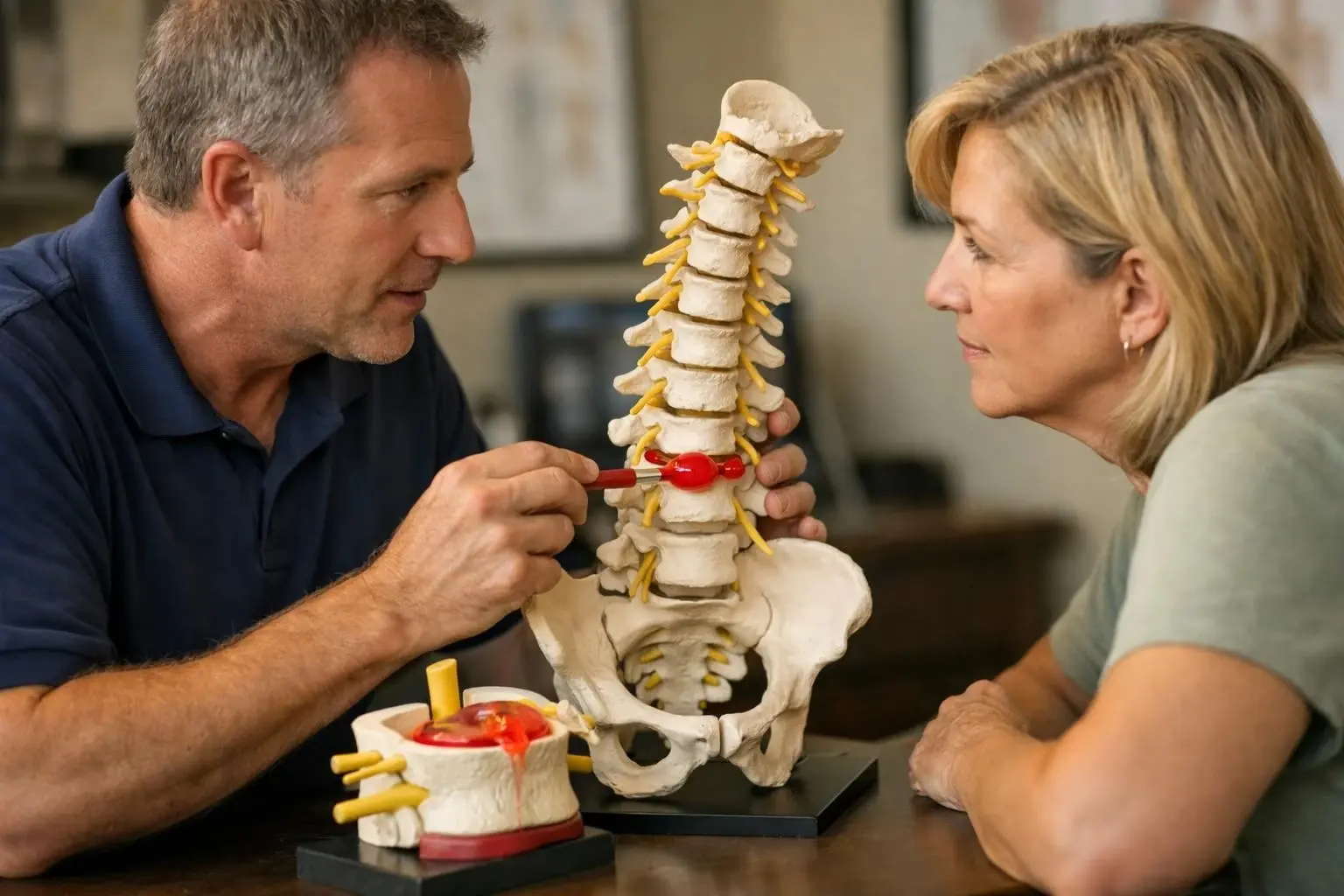
A herniated disc is a common spine problem. It affects the cushions between spine bones.
Related glossary terms: Sciatica, Degenerative Disc Disease, Nerve Compression.
These cushions are called discs. They act like shock absorbers. This lets your spine bend and move.
Each disc has a soft center. It's like jelly. The outside is tough and rubbery.
When a disc herniates, the jelly pushes out. It goes through a crack in the outside. This can bother nearby nerves.
Herniated discs often happen in the lower back. They can also happen in the neck. The main signs are sharp pain or burning.
You might feel numbness or tingling. Weakness can also happen. These signs show where the nerve is bothered.
A lower back disc can cause leg pain. This is called sciatica. A neck disc can cause arm or hand pain.
Some herniated discs don't cause signs. Some people don't know they have one.
How Herniated Disc Works?
Your spine has 24 bones called vertebrae. They stack on top of each other. Each bone has a disc between them.
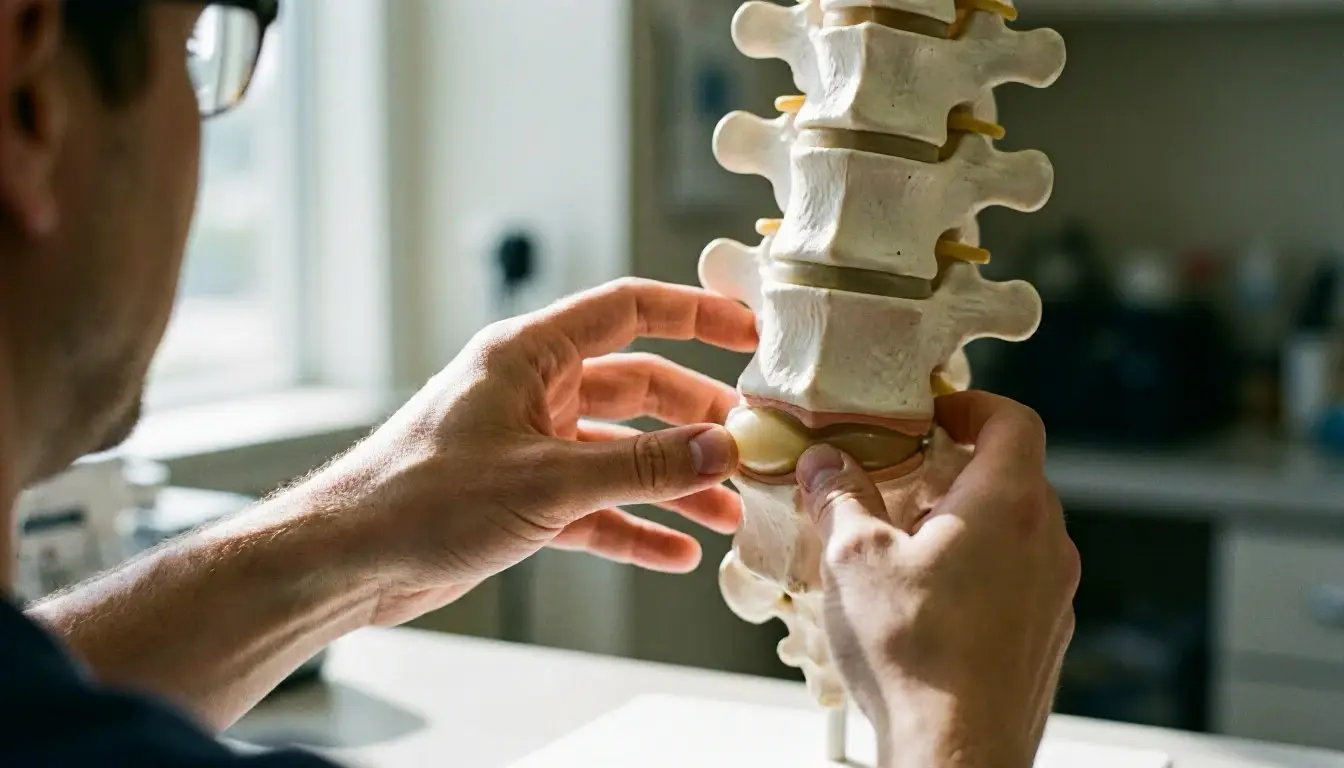
Discs act like cushions. They have a tough outer ring. Inside is soft gel.
Over time, the outer ring can tear. The gel can bulge out. This is a herniated disc.
The bulge can press on nerves. This causes pain. Where it hurts depends on the disc's spot.
Herniated discs often happen from wear and tear. This is called disc degeneration. As you age, discs dry out.
They get less flexible. This makes them easier to tear. Heavy lifting can also cause a herniated disc.
Twisting suddenly can hurt your discs. So can falls or car accidents. Being overweight raises your risk.
Smoking and sitting a lot can also cause problems.
Why Herniated Disc Matters?
A herniated disc can make life hard. Simple tasks may hurt. Sitting, standing. Or walking can be tough.
The pain can stop you from working. It can keep you from exercising. It can even make sleep hard.
If not treated, it can cause long-term problems. Nerves can get damaged. You might lose feeling in some areas.
Getting help early is best. It can stop worse problems. It can help you feel better faster.
Most herniated discs don't need surgery. Rest can help. So can physical therapy.
Chiropractic care can also help. It makes pain less. It helps you move better.
Sometimes, doctors give medicine. They might give shots too. These help with pain and swelling.
Knowing about the problem helps. You can make good choices. You can find the best treatment for you.
When Herniated Disc Matters Most?
Herniated discs matter when they hurt daily life. Pain can make sitting hard. It can make driving tough.
Lifting things can be hard too. If this happens, see a doctor. Sudden weakness is a bad sign.
Losing control of your bladder is serious. So is bad numbness. These can mean a big problem.
This problem is called cauda equina syndrome. Get help right away if this happens.
Some jobs raise the risk. Lifting heavy things can hurt your back. So can bending a lot.
Sitting too long can also cause problems. Athletes have a higher risk too. So do older people.
Know the signs. Get help early. This can stop long-term problems. It can help you get better faster.