Understanding Orthotics
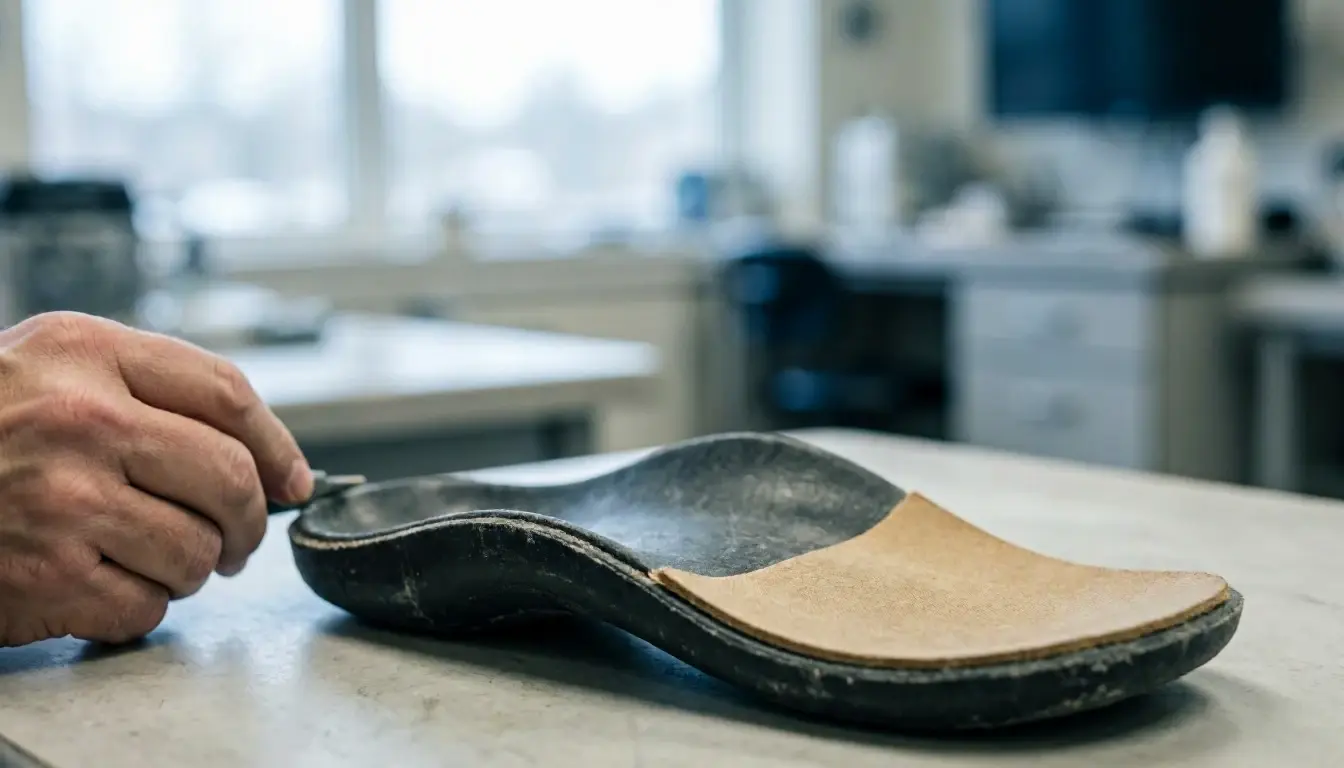
Orthotics help your feet, ankles. And legs. They go inside shoes. They fix how your foot moves.
Related glossary terms: Posture Correction, Chronic Pain, Adjustment.
Some feet roll inward. This is called overpronation. Others roll outward. That's supination.
Orthotics spread out pressure. They steady your foot. This cuts pain. It stops injuries. It helps you move better.
They help with flat feet. They help with plantar fasciitis (foot pain). They help with bunions. They help with knee pain.
There are two kinds of orthotics. One is custom-made. The other is prefabricated (ready-made).
Custom orthotics come from a mold of your foot. They fit only you. Ready-made ones come in standard sizes.
Ready-made ones cost less. Custom ones fit better. They help with big or long-term problems.
Both kinds make feet feel better. But custom ones give more help for bad issues.
How Orthotics Work?
Orthotics change how your foot hits the ground. When you walk, your foot takes in shock. It spreads out weight.
If your foot isn't straight, pressure isn't even. This strains muscles and joints. It causes pain in feet, knees. Or back.
Orthotics add support where you need it. They guide your foot to a better spot.
Flat feet can drop inward. An orthotic with arch support stops this. It eases strain on the plantar fascia (foot tissue).
This lowers the chance of plantar fasciitis (foot pain). A deep heel cup steadies your foot. It helps with balance too.
Orthotics use different materials. Some are hard plastic. Some are soft foam. Some use carbon fiber (strong, light material).
Hard ones give structure. Soft ones cushion. They absorb shock.
Why Orthotics Matter?
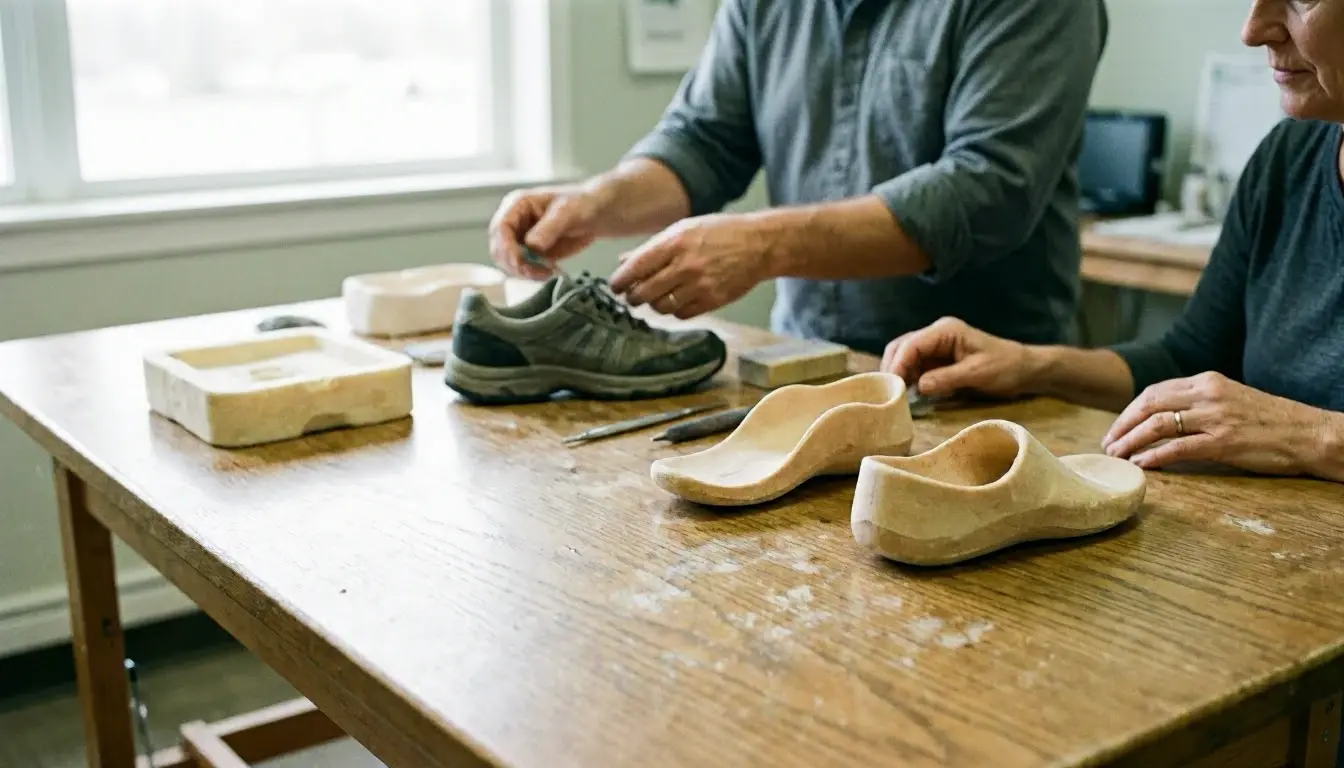
Orthotics make life better for people with pain. Bad foot movement causes long-term pain. It makes walking hard.
It can cause injuries like stress fractures (small bone cracks). Orthotics fix this. They let people stay active.
Athletes and workers on their feet a lot benefit. Orthotics help them perform better. They cut injury risk.
Orthotics help with other health issues too. People with diabetes get foot problems. Nerve damage and bad blood flow cause this.
Orthotics protect their feet. They cut pressure points. They stop sores. People with arthritis use them too.
They ease joint stress. They help people move better. Orthotics work with other treatments.
These include chiropractic care (back and joint help). They include physical therapy (exercise help). They fix pain causes.
When Orthotics Matter Most?
Orthotics help most when feet cause pain. Signs you need them include foot pain. Ankle, knee. Or back pain can be signs too.
Pain gets worse with activity. Visible foot problems like flat feet need help. Bunions or high arches need help too.
Athletes and workers on their feet a lot need them. Nurses, runners. And retail workers benefit.
Orthotics help with long-term problems. These include plantar fasciitis (foot pain). They include Achilles tendonitis (heel pain).
They include shin splints (leg pain). Without help, these get worse. They take longer to heal.
Orthotics can be used after injuries. These include sprained ankles or stress fractures. They stop re-injury.
They help healing. Kids with foot issues need them too. They guide proper foot growth.
A doctor can tell if you need orthotics. A chiropractor or podiatrist (foot doctor) can help. They find the right fix for you.