Glossary

What is Vertebra?

Vertebra is one of the 33 individual bones that stack together to form the human spine. Each vertebra has a strong, bony body in front and a ring-like arch in back that protects the spinal cord. Vertebrae support body weight, allow movement. And shield nerves running through the spinal canal.

Reviewed by ChiropractorNewnan.comSources reviewed: American Association of Neurological Surgeons, National Institute of Arthritis and Musculoskeletal and Skin Diseases

Quick Facts About Vertebra

Category

Spinal bone

Used for

Weight support, movement, nerve protection

Common confusion

Vertebra (singular) vs. Vertebrae (plural)

Also called

spinal bone, backbone segment

Often discussed with

Chiropractic Consultation and Diagnosis

Key Takeaways About Vertebra

Understanding Vertebra
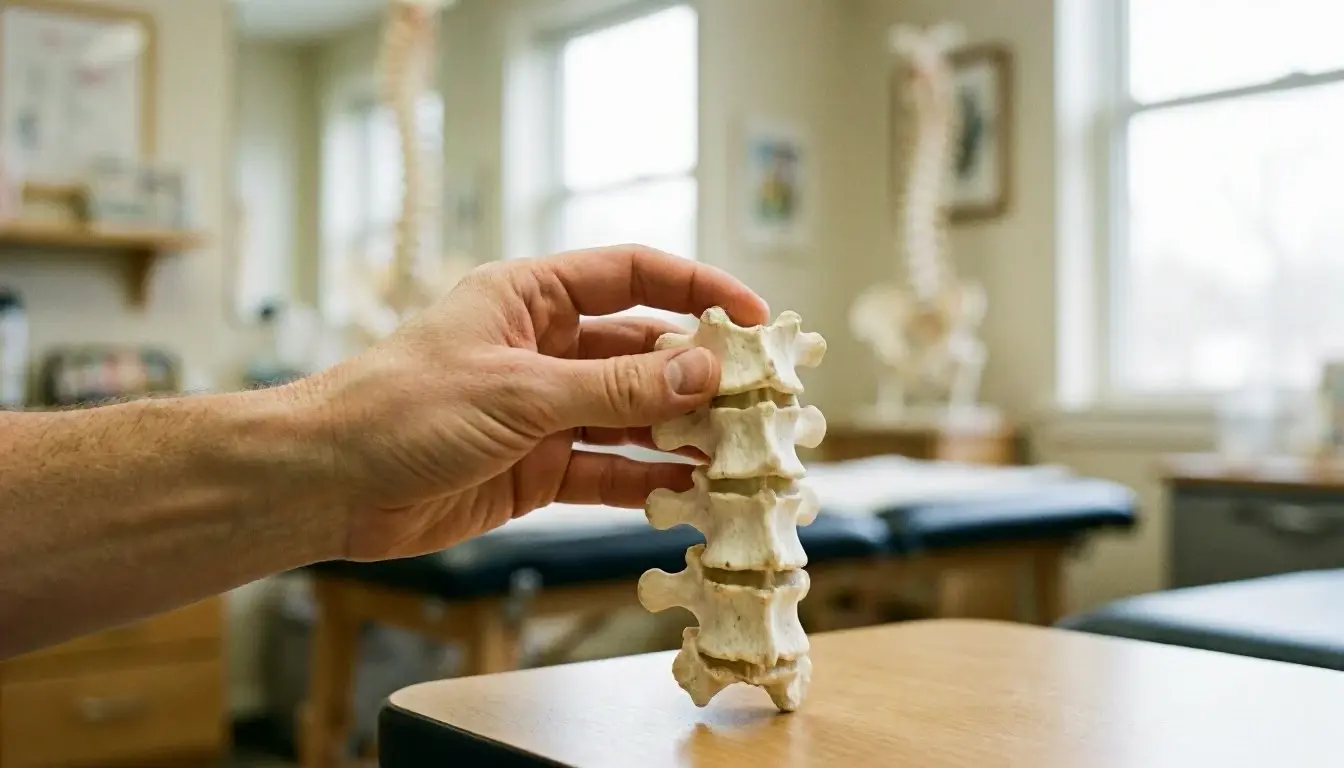
Vertebra in Chiropractor: Vertebra is one of the 33 individual bones that stack together to—visual guide

A vertebra is one bone in your spine. Your spine has 33 vertebrae. They group into five parts.

Related glossary terms: Intervertebral Disc, Herniated Disc, Spinal Manipulation.

These parts are the neck, mid-back, lower back, pelvis. And tailbone. Each part has a name. The neck is cervical.

The mid-back is thoracic. The lower back is lumbar. The pelvis is sacral. The tailbone is coccygeal.

Each vertebra has a thick part in front. This part holds weight. There's also a bony arch in back.

The arch makes a hollow space. This space is called the vertebral foramen (a hole). It lines up with other vertebrae.

Together, they make the spinal canal. This canal protects the spinal cord. The cord is a bundle of nerves.

Nerves send messages to your brain. They also send messages from your brain. This lets your body move and feel.

Vertebrae have discs between them. These discs act like cushions. They absorb shock and help you move.

Vertebrae come in different shapes and sizes. The size depends on where they are. Neck bones are small and move a lot.

Lower back bones are bigger. They hold more weight. But all vertebrae have the same parts.

They have a body, an arch. And bony bumps. These bumps are called processes. Muscles and ligaments attach to them.

This helps keep your spine stable. It also lets you bend and twist.

How Vertebra Works, Is Measured. Or Is Used?

Vertebrae help you stay steady and move. The thick part holds most of your weight. Discs spread out the pressure.

The arch keeps your spinal cord safe. Nerves branch out through small holes. These holes are called intervertebral foramina (nerve exits).

Nerves send signals to your brain. They tell your brain how things feel. They also help your body move.

Doctors check vertebrae with pictures. They use X-rays, MRIs. Or CT scans. These pictures show problems.

They can find bones that are out of place. They can see broken bones or worn-out discs. They also look for other issues.

A herniated disc (bulging disc) can press on a nerve. This can cause pain or numbness. It might make your arm or leg weak.

Chiropractors fix misaligned vertebrae. This can help nerves work better. It can also make your spine healthier.

Why Vertebra Matters?
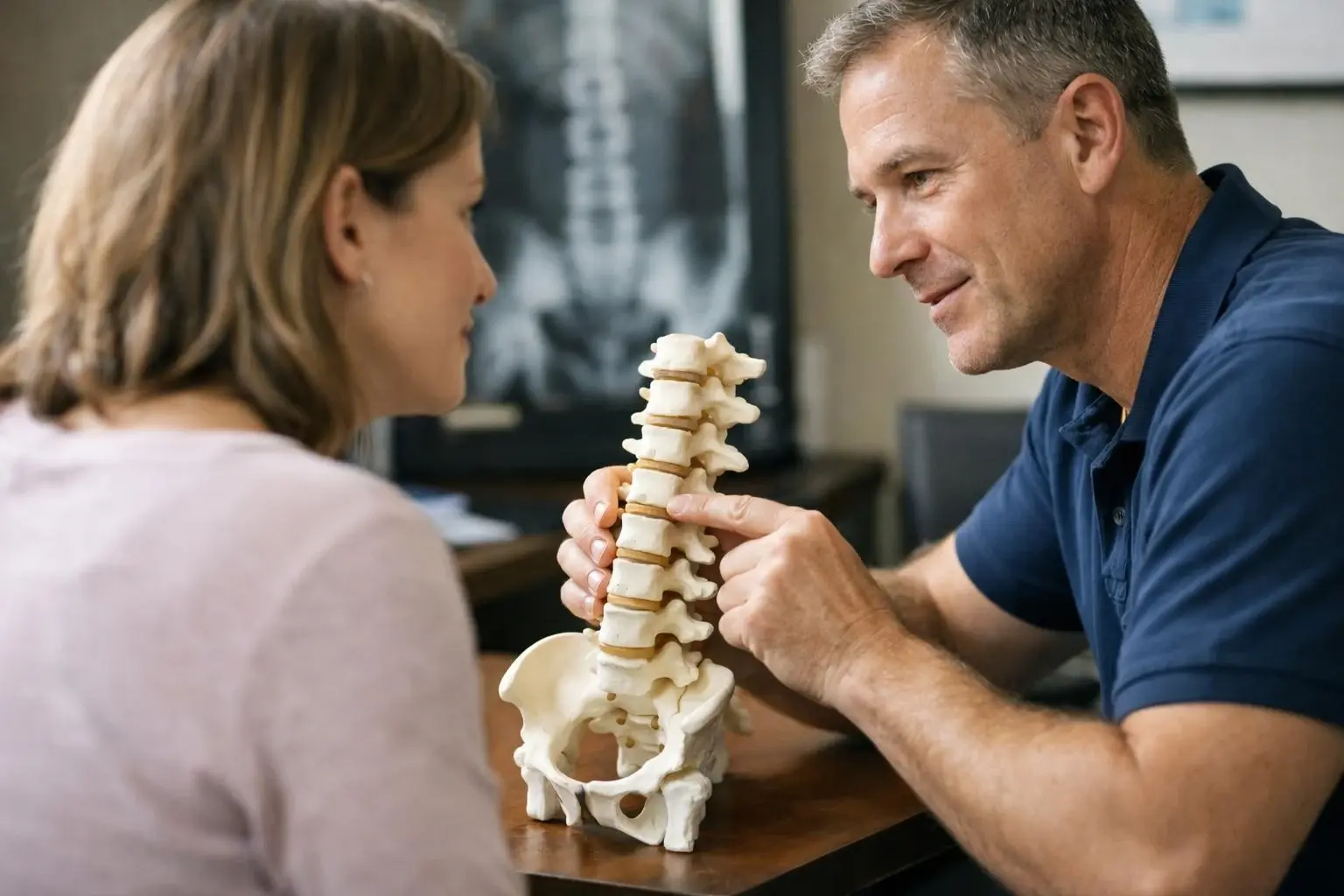
How Vertebra applies to Chiropractor services in Newnan, United States—practical illustration

Healthy vertebrae help you stay active. They let you move without pain. They also hold your weight well.

Bones that are out of place can cause problems. You might have back pain all the time. Nerves can get squeezed too.

This can make it hard to move. A misaligned bone in your lower back can cause sciatica (leg pain).

Osteoarthritis can wear down vertebrae. This can make the spinal canal narrow. This is called spinal stenosis.

It can make your legs numb or weak. You might have trouble walking. Vertebrae also protect your spinal cord.

A hurt spinal cord can be very serious. It can cause paralysis or make you lose feeling. Even small injuries matter.

Broken or moved bones can change your life. Knowing about vertebrae helps you take care of your spine.

When Vertebra Matters Most?

Vertebrae matter a lot after injuries. Car accidents or falls can break or move them. This can cause pain right away.

Sports injuries can hurt vertebrae too. Some jobs wear down vertebrae over time. Construction or nursing can do this.

These jobs can cause herniated discs. They can also lead to degenerative disc disease (worn-out discs). Getting older affects vertebrae too.

Bones can get weaker. They can break more easily. They can also wear down over time.

Everyday actions matter too. Lifting, bending. Or sitting can stress vertebrae. Bad posture or lifting wrong can hurt them.

Using a good chair helps. So does lifting the right way. This can keep your spine from getting hurt.

If your back hurts a lot, see a doctor. Numbness or weakness can mean a problem. Vertebrae or nearby parts might be hurt.


How to Evaluate Vertebra?

Related Concepts Compared

Vertebra vs. Intervertebral Disc

An intervertebral disc is a soft, cushion-like structure between vertebrae that absorbs shock. While a vertebra is a hard, bony structure that provides support and protection.

Vertebra vs. Spinal Cord

The spinal cord is a bundle of nerves running through the spinal canal formed by vertebrae. While vertebrae are the bones that protect it.

Expert Note

Vertebrae are not just static bones—they dynamically adapt to stress and movement. Even minor misalignments can alter nerve function and muscle tension, making regular spinal check-ups valuable for maintaining overall health.

Common Mistakes or Myths About Vertebra

  • Confusing a single vertebra with the entire spine—vertebrae are individual bones, not the whole spinal column.
  • Thinking vertebrae never change—bone spurs and degenerative changes can alter their shape over time.
  • Assuming all vertebrae are identical—cervical, thoracic. And lumbar vertebrae differ in size and function.
  • Believing vertebrae are solid—each has a hollow center that forms the spinal canal.

Vertebra in Practice: A Real-World Example

After lifting a heavy box incorrectly, a person feels sharp pain in their lower back. An X-ray reveals a slight misalignment in one of the lumbar vertebrae, which is pressing on a nearby nerve. Chiropractic adjustments help realign the vertebra, relieving the pain and restoring normal movement.

Related Services

Related Terms

Intervertebral Disc

Intervertebral Disc is intervertebral Discs are flexible, cushion-like pads located between the vertebrae of the spine. Each disc acts as a shock absorber, preventing bones from rubbing together during movement. They consist of a tough outer layer called the annulus fibrosus and a soft, gel-like center known as the nucleus pulposus. These discs also help maintain spinal flexibility and proper spacing between vertebrae.

Herniated Disc

Herniated Disc is a spinal condition where the soft inner gel of a spinal disc leaks through a tear in its tough outer layer. This can press on nearby nerves, causing pain, numbness. Or weakness in the back, arms. Or legs. Herniated discs often occur in the lower back or neck and are sometimes called slipped or ruptured discs.

Spinal Manipulation

Spinal Manipulation is a hands-on therapy technique used by chiropractors and other healthcare providers to apply controlled force to a joint in the spine. This force helps improve spinal motion, reduce pain. And restore function by relieving pressure on nerves, muscles. And discs. The procedure often produces a popping or cracking sound due to gas releasing from the joint.

Subluxation

Subluxation is a partial dislocation of a joint, particularly in the spine, where vertebrae shift out of their normal position but don't fully dislocate. This misalignment can irritate nerves, disrupt communication between the brain and body. And contribute to pain, stiffness. Or reduced function. Chiropractors identify and correct subluxations to improve mobility and overall health.

Nerve Compression

Nerve Compression is a condition where a nerve is pressed, squeezed. Or pinched by surrounding tissues such as bones, muscles, tendons. Or discs. This pressure disrupts the nerve’s normal function, causing pain, numbness, tingling. Or weakness in the affected area. Nerve Compression often occurs in the spine, wrists. Or elbows and may result from injury, repetitive motion. Or poor posture.

ChiropractorNewnan.com

Have Questions About Vertebra?

Contact ChiropractorNewnan.com for practical guidance on Vertebra and related chiropractor work in Newnan.

+1 770-692-1041